
CAYRA KNOWLEDGE / HIV+ PATIENT GUIDES
Dental Implants and Smile Makeovers in Turkey for HIV+ Patients
Dental implants for HIV patients in Turkey may be considered after an individualized dental and medical assessment. This guide explains how HIV control, oral infection, bone and gum health, medicines, smoking and long-term maintenance shape the decision.
Updated 20 August 2026 · Evidence-led patient information · Individual eligibility requires specialist review
PRIVATE, CASE-BY-CASE REVIEW
HIV status alone does not answer whether a procedure is appropriate. The treating specialist reviews the procedure, current health, HIV control, medicines and recovery plan together.
QUICK ANSWER
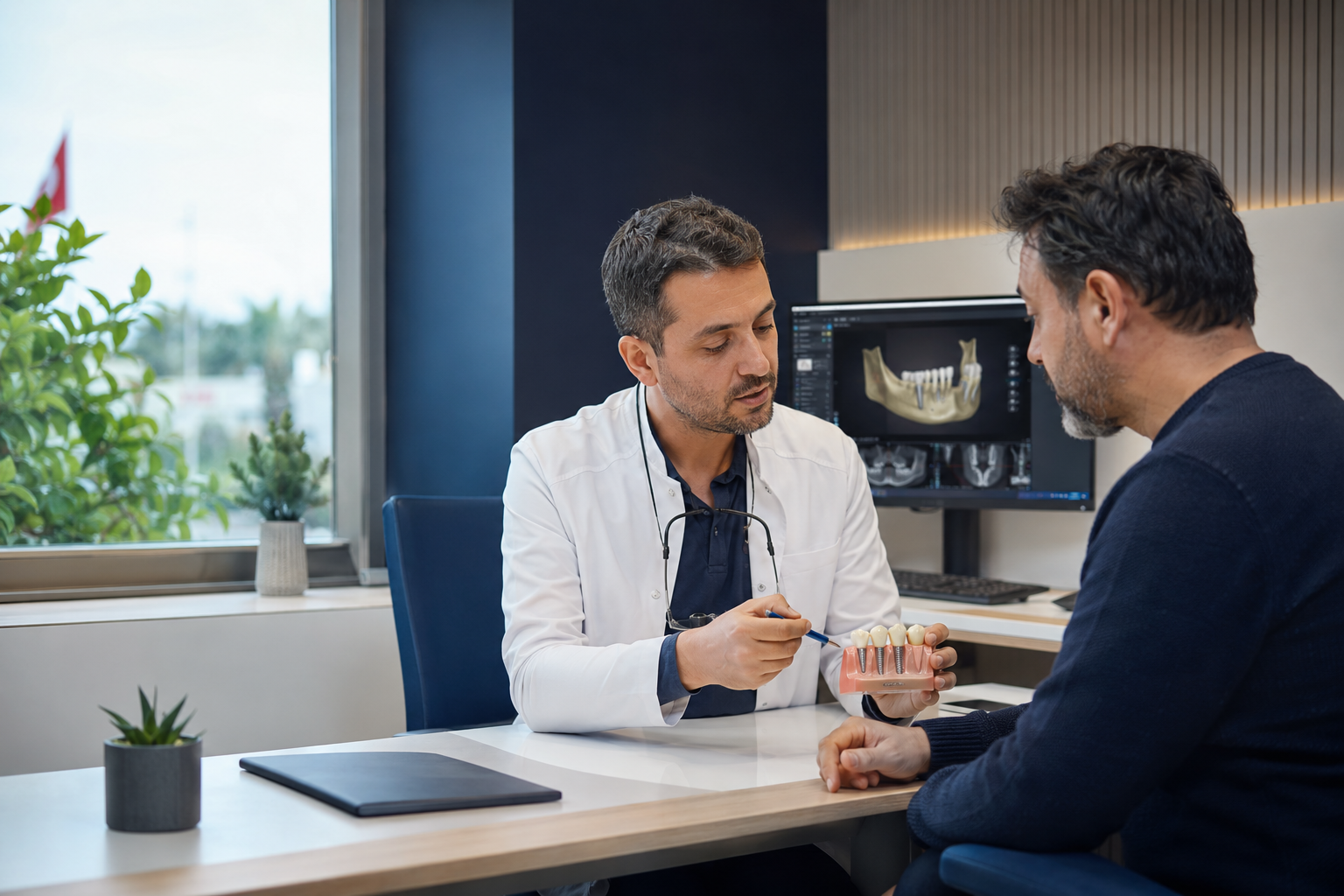
Living with HIV does not automatically exclude someone from dental implants or cosmetic restorative dentistry. Published reviews report encouraging implant outcomes in selected people with HIV, but the evidence base is limited and does not remove the need to assess viral suppression, immune status, active oral disease, bone volume, medicines and the ability to complete follow-up.
What the medical team needs to review
A useful consultation is more than a positive HIV test result. The dentist needs a current view of your mouth and the clinician managing your HIV needs to confirm that treatment and monitoring are stable. Never stop or change antiretroviral therapy (ART), antibiotics or another regular medicine for dental travel unless the prescribing clinician instructs you to do so.
| Review area | Why it matters | What may be requested |
|---|---|---|
| HIV control | Elective surgery planning is safer when current health is understood and HIV care is stable. | Recent viral-load and CD4 results; ART list; HIV clinician details when coordination is needed. |
| Oral infection and gums | Untreated periodontitis, abscesses or mucosal disease can undermine healing and implant maintenance. | Clinical periodontal examination, dental X-rays and treatment of active disease first. |
| Bone and bite | Implants require adequate bone and a load plan that protects the restoration. | Panoramic X-ray and, when indicated, CBCT; missing-tooth map; bite and bruxism assessment. |
| Whole-health risks | Smoking, diabetes, kidney or liver disease and some medicines may alter risk or aftercare. | Medical history, allergies, smoking status, recent blood tests and complete medicine/supplement list. |
Does HIV change dental implant candidacy?
HIV status should be treated as one part of the risk assessment, not as an automatic refusal. A systematic review indexed by PubMed found no clear increase in implant failure among the small number of HIV-positive patients studied. Other long-term reports are also reassuring. However, study populations and follow-up differ, and many participants had controlled HIV and were receiving ART. The responsible conclusion is therefore possible for selected patients, not “risk-free” or “guaranteed.”
For elective oral surgery, the team considers the same fundamentals used for every implant patient—active infection, periodontal stability, bone quality, smoking, diabetes, oral hygiene, bite forces and maintenance—alongside HIV-specific factors. The current perioperative HIV guidance emphasizes reviewing viral load, CD4 information when relevant, ART and potential drug interactions rather than denying surgery solely because of HIV.
If the viral load is not controlled, the CD4 count is low, an opportunistic infection is active, or unexplained oral lesions are present, elective implant placement may be postponed while the appropriate clinicians investigate and optimize health. Urgent dental infection still needs timely professional treatment; postponing an elective implant is not the same as ignoring an acute problem.
Implants, crowns, veneers and smile-makeover choices
A “smile makeover” is not one fixed operation. It is a treatment plan built around what can be preserved safely. A patient may need periodontal therapy, fillings, root-canal treatment, crowns, veneers, whitening, orthodontic planning, one or more implants, or an implant-supported bridge. Removing restorable teeth simply to create a rapid cosmetic result is not a responsible shortcut.
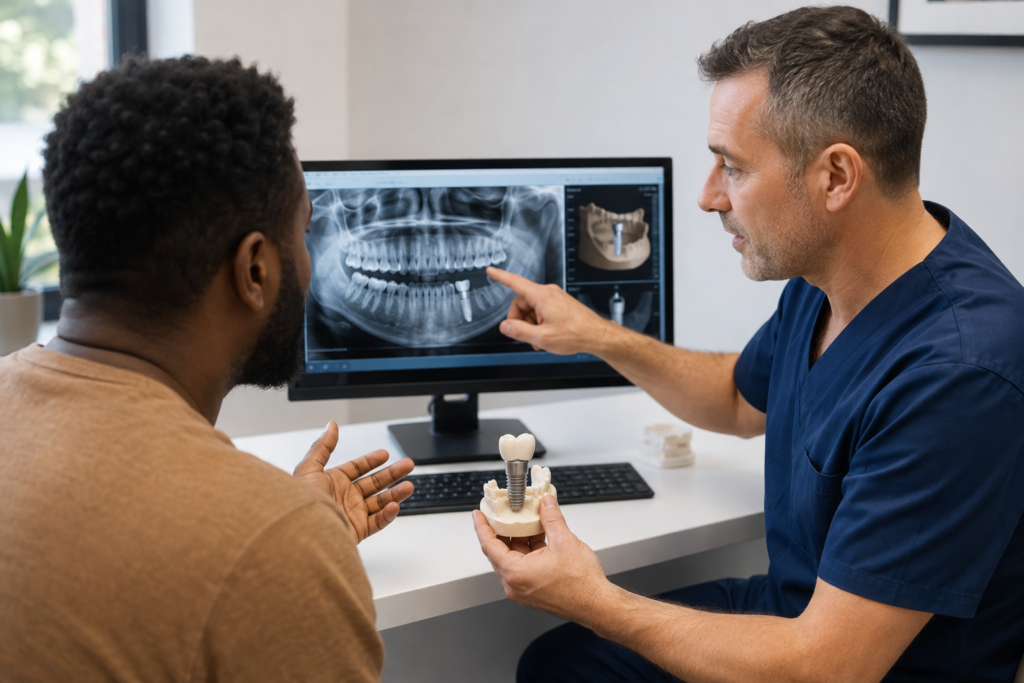
At a Cayra dental consultation, photographs and a panoramic X-ray can support the first review, but the definitive plan may require examination, periodontal charting and CBCT imaging. For extensive tooth loss, patients can learn about All-on-4 dental implants and All-on-6 dental implants; these pages explain treatment concepts, not personal eligibility.
Why gum health comes before cosmetic design
Healthy-looking crowns cannot compensate for uncontrolled periodontal disease. People with HIV may experience common periodontal disease as well as HIV-associated oral conditions. Current periodontal guidance for adults with HIV stresses routine dental care, oral hygiene and closer recall when clinically needed. Any bleeding, swelling, mobility, persistent ulcer, white patch or non-healing lesion should be assessed before irreversible cosmetic work.
ART, antibiotics, pain medicines and sedation
Continue ART on schedule unless the HIV prescriber and treating dentist or anaesthesia team agree on a different plan. The exact drug names matter: “HIV tablets” is not enough information. Some antiretroviral regimens—particularly pharmacokinetic boosters—can interact with sedatives, analgesics, corticosteroids and other perioperative medicines. The clinician should check the complete regimen with a reliable interaction resource and consider kidney and liver function.
HIV does not mean antibiotics are automatically required for every dental procedure. Antibiotic decisions should be based on the operation, infection status, immune/medical assessment, allergies and local clinical guidance. Unnecessary antibiotics add adverse-effect and resistance risks. Likewise, over-the-counter pain medicines are not automatically suitable for everyone; kidney disease, anticoagulants, stomach problems and other medicines can change the choice.
Healing, osseointegration and long-term maintenance
Implant treatment has a surgical phase and a restorative phase. After placement, bone healing around the implant—osseointegration—takes time. The schedule depends on bone quality, grafting, implant stability, infection history, the jaw treated and the planned restoration. A temporary tooth or bridge may sometimes be possible, but “teeth in a day” does not mean biological healing is complete in one day.
Good maintenance is essential for every patient and particularly important when periodontal risk is present. Follow the dentist’s cleaning instructions, use the recommended brushes or floss aids, attend professional maintenance, avoid smoking and report pain, swelling, pus, mobility or persistent bleeding. Implant restorations can develop peri-implant mucositis or peri-implantitis; early assessment is preferable to waiting until a trip back to Turkey is convenient.
Before traveling, agree who will handle urgent care and routine maintenance after you return home. Ask for implant brand and component records, treatment notes, radiographs and a clear schedule for the second visit if the final restoration is delayed. A good medical-tourism plan includes continuity, not only the procedure date.
Planning dental treatment in Turkey with HIV
Start with a confidential remote review. Send recent dental images, a panoramic X-ray if available, your goals, medical history, ART and other medicines, allergies, smoking status and recent HIV monitoring results requested by the clinical team. The first opinion is provisional until examination and imaging in Turkey confirm it.
Ask the coordinator to separate the clinical plan from the travel package. Confirm the number of visits, temporary and final teeth, implant system, grafting contingencies, laboratory stages, included transfers/accommodation, what happens if the plan changes, and who provides aftercare at home. Prices should only be issued from a current, case-specific quotation.
- Remote screening: records, images, medicines and HIV information reviewed privately.
- Specialist assessment: dentist confirms oral disease control, imaging needs and suitable options.
- Written plan: procedures, alternatives, stages, risks, expected stay and current inclusions documented.
- On-site confirmation: examination and imaging may refine the plan before consent.
- Aftercare handover: records, red flags, maintenance and return-visit plan supplied.
Use the Cayra Clinic contact page to request a private review. The coordinator can organize information, but only the dentist and relevant medical clinicians can confirm candidacy.

Frequently asked questions
Can an HIV-positive patient receive dental implants?
Potentially, yes. HIV status alone is not an automatic exclusion, and published studies report encouraging outcomes in selected patients. Approval still depends on oral health, HIV control, medicines, bone, smoking and other individual risks.
Do I need an undetectable viral load for dental implants?
The treating clinicians should review a recent viral load and the broader clinical picture. There is no responsible universal number that can confirm eligibility online; uncontrolled viraemia or other health concerns may prompt optimization before elective surgery.
Should I stop ART before implant surgery?
Usually ART is maintained, but never make this decision yourself. Give the team the exact regimen so the HIV prescriber, dentist and anaesthesia team can check timing and drug interactions.
Will I automatically need antibiotics because I have HIV?
No. HIV status alone does not make antibiotics automatic. The dentist decides based on the procedure, infection, immune and medical assessment, allergies and applicable guidance.
Can implants and a smile makeover be completed in one trip?
Some restorative work may be completed in one visit, but implants often require biological healing and a later definitive restoration. The number of trips depends on extractions, grafting, stability, laboratory work and the final design.
What should I send for a remote assessment?
Send a panoramic X-ray if available, clear smile and intraoral photos, missing or loose teeth, symptoms, goals, full medical history, ART and other medicines, allergies, smoking status and the recent results the team requests.
Related Cayra treatment guides
Continue your research with these verified live Cayra pages:
Medical sources and further reading
This guide is educational and does not replace advice from your HIV clinician or treating specialist.
- NYSDOH AIDS Institute — Perioperative Care in Adults With HIV (updated 2024)
- NYSDOH AIDS Institute — Management of Periodontal Disease in Adults With HIV (updated 2026)
- Ata-Ali et al. — HIV and dental implant osseointegration: systematic review
- Lemos et al. — Survival of dental implants placed in HIV-positive patients
Request a confidential dental and medical review
Share your dental images, treatment goals, medicines and requested HIV monitoring information. Cayra can coordinate the initial case review without treating HIV status as a marketing claim or automatic approval.
No treatment, price, date or eligibility is confirmed until the appropriate specialist and facility have reviewed the case.
