
CAYRA KNOWLEDGE / HIV+ PATIENT GUIDES
Laser Eye Surgery and Intraocular Lenses in Turkey for HIV+ Patients
Laser eye surgery for HIV patients in Turkey is not decided by HIV status alone. A safe assessment combines stable HIV care with detailed corneal, retinal, lens and tear-film testing and checks for previous HIV-related eye disease, medicine interactions and realistic visual goals.
Updated 20 August 2026 · Evidence-led patient information · Individual eligibility requires specialist review
PRIVATE, CASE-BY-CASE REVIEW
HIV status alone does not answer whether a procedure is appropriate. The treating specialist reviews the procedure, current health, HIV control, medicines and recovery plan together.

On this page
QUICK ANSWER
Selected people living with well-controlled HIV have undergone refractive and cataract surgery with useful visual outcomes in published studies. The evidence is smaller than for the general population. Active ocular infection or inflammation, prior CMV retinitis, unstable refraction, abnormal corneal shape, severe dry eye or uncontrolled systemic illness may change or postpone treatment. LASIK, SMILE, PRK and an intraocular lens solve different problems and are not interchangeable upgrades.
What the medical team needs to review
| Review area | Why it matters | What may be requested |
|---|---|---|
| HIV history | Current control and previous opportunistic eye disease can affect planning and prognosis. | Recent viral load/CD4 information when requested, ART list, history of CMV retinitis, uveitis or other infections. |
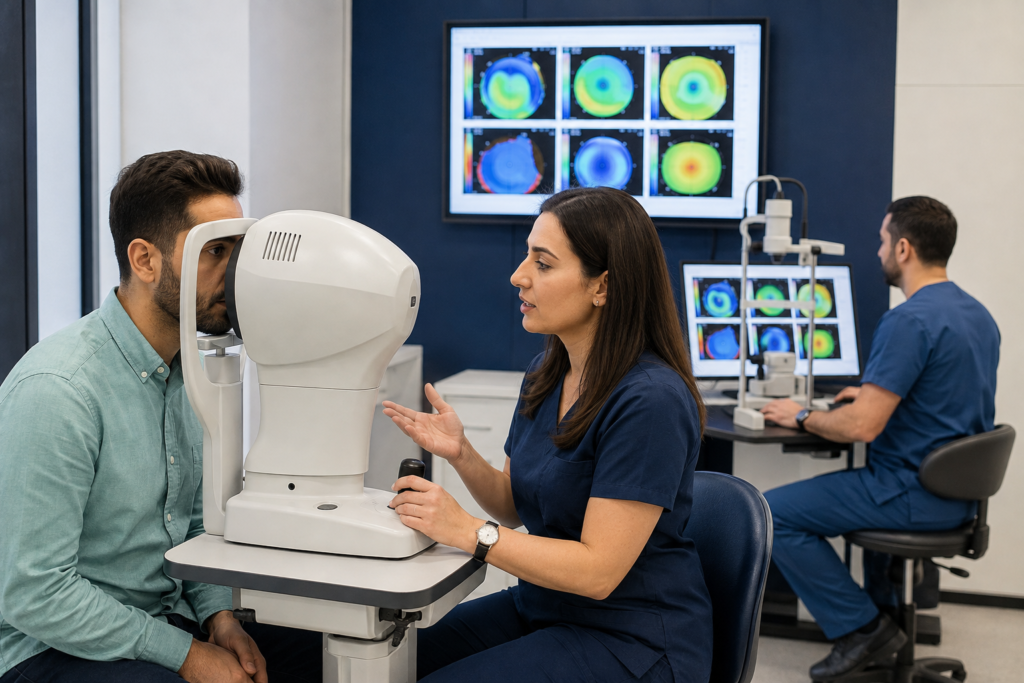
| Cornea and tear film | Laser suitability depends on shape, thickness, stability and ocular-surface health. | Refraction, pachymetry, topography/tomography, dry-eye assessment and contact-lens pause as instructed. |
| Lens, retina and optic nerve | Not all blurred vision comes from the cornea or cataract. | Dilated retinal examination, lens assessment, eye pressure and macular/optic-nerve imaging when indicated. |
| Medicines and recovery | ART, anticoagulants, steroids and other medicines may affect interaction or monitoring decisions. | Full generic medicine list, allergies, kidney/liver conditions and previous eye operations. |
Does HIV affect eligibility for laser eye or lens surgery?
HIV is not an automatic exclusion from elective eye surgery. A U.S. military cohort reported infrequent complications after refractive surgery in people living with HIV, while a 2024 systematic review found that cataract surgery substantially improved visual acuity in people with HIV. Both bodies of evidence also underline selection and eye-specific disease: small cohorts cannot guarantee the result for an individual.
General perioperative HIV guidance recommends reviewing current viral load, CD4 information when clinically relevant, ART and active infection rather than making decisions from HIV status alone. If HIV is not controlled or an opportunistic illness is active, the ophthalmologist and HIV clinician may recommend optimization before elective surgery.
HIV can also be associated with ocular conditions that matter independently of surgical wound healing. Previous CMV retinitis can leave retinal damage; uveitis can raise inflammation risks; herpes infections may affect the cornea; and some patients have dry-eye or retinal problems unrelated to HIV. Correcting corneal focus will not restore vision lost from irreversible retinal or optic-nerve disease, so a complete examination protects patients from an unsuitable sales promise.
LASIK, SMILE, PRK and intraocular lenses: what changes?
LASIK creates a corneal flap and reshapes underlying tissue. SMILE removes a small corneal lenticule through a smaller incision. PRK reshapes the cornea after removing the surface epithelium and has a different early-healing profile. All require a stable prescription, appropriate corneal measurements and realistic expectations. Learn about Cayra’s eye service line and ReLEx SMILE as starting information, not a personal recommendation.
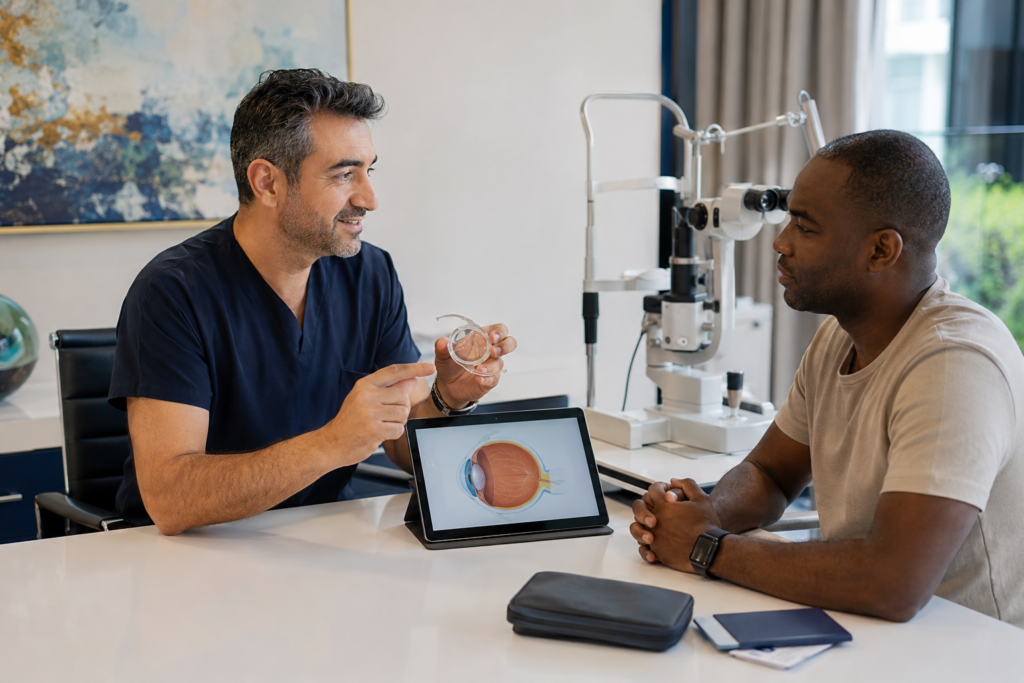
Cataract surgery removes a cloudy natural lens and replaces it with an intraocular lens (IOL). Refractive lens exchange uses a similar lens-replacement concept without a visually significant cataract and therefore carries intraocular surgical risks that need careful justification. Monofocal, toric and presbyopia-correcting lenses have different optical trade-offs. A “premium” IOL is not automatically the best choice when retinal disease, glaucoma, corneal irregularity or night-vision priorities are present.
Cayra has live information pages for eye surgeries in Turkey, lens replacement surgery and cataract surgery. The definitive technique and lens model should appear in the surgeon’s written plan after diagnostic testing.
Tests and records to arrange before traveling
Send your age, glasses/contact-lens prescription, reason for surgery, previous eye operations, dry-eye symptoms, retinal or inflammatory eye history, medical conditions, ART and other medicines, allergies and recent HIV information requested by the team. If you have optical coherence tomography (OCT), visual fields, corneal maps or prior surgical reports, include them.
A remote review can identify missing information but cannot replace on-site measurements. Contact lenses can temporarily alter corneal shape; follow the examining clinic’s instructions about when to stop wearing them. Measurements may need repeating before consent. Do not book a non-refundable short trip on the assumption that the procedure is guaranteed after online screening.
Questions worth asking the eye surgeon
- What diagnosis is causing my reduced vision, and will this procedure address it?
- Which findings make me suitable or unsuitable for LASIK, SMILE, PRK or an IOL?
- What visual outcome is realistic with my retinal and optic-nerve health?
- What are the procedure-specific risks, alternatives and chance of needing glasses?
- How many post-operative checks are required before flying and after returning home?
ART, eye drops, healing and warning symptoms
Do not stop ART without the HIV prescriber. Give the ophthalmologist the exact regimen and disclose systemic or ocular steroids, anticoagulants, diabetes medicines and supplements. Drug interactions are usually assessed medicine by medicine. Prescribed post-operative drops should be used exactly as directed; do not add leftover antibiotics or steroid drops because an eye feels irritated.
Temporary blur, light sensitivity, foreign-body sensation or dryness can occur after some procedures, but the expected pattern varies. The surgeon should explain what is normal for the chosen operation and provide a 24-hour escalation route. Severe or increasing pain, sudden reduction of vision, a new curtain or shower of floaters, marked redness, discharge, flashes or significant light sensitivity require urgent eye assessment.
Travel timing and aftercare for an international eye patient
The safe length of stay depends on the operation, whether one or both eyes are treated, early examination findings and the surgeon’s protocol. Cataract or lens procedures may be staged. Flying is not cleared by a blog or package duration; the operating ophthalmologist decides based on the procedure and recovery.
Before departure, obtain the diagnosis, procedure report, laser parameters or IOL model and power, medicine schedule, examination results, emergency instructions and next follow-up date. Identify an ophthalmologist at home who can review you promptly. Carry drops and ART in hand luggage and protect them from temperature extremes according to the product instructions.
International-health-tourism providers in Türkiye should be checked against current Ministry authorization information. The Ministry’s list was updated in July 2026. A coordinator can help with records and logistics, but only the ophthalmologist can confirm the operation and lens.
Use the Cayra contact page for a confidential preliminary review.
Frequently asked questions
Can someone with HIV have LASIK or SMILE?
Potentially, yes. Small studies report encouraging outcomes in selected patients, but approval depends on HIV stability, corneal measurements, prescription stability, ocular-surface health and the absence of active eye infection or inflammation.
Is an undetectable viral load enough to qualify for laser eye surgery?
No single result proves eye-surgery candidacy. Viral control is important, but the ophthalmologist must also examine the cornea, tears, lens, retina, optic nerve and overall health.
Can HIV-related retinal damage be corrected with LASIK?
LASIK changes corneal focusing power; it does not repair retinal or optic-nerve damage. The team should identify the cause of reduced vision and explain the realistic potential before surgery.
Are premium multifocal IOLs always better?
No. They can reduce dependence on glasses for selected patients but may introduce optical trade-offs. Retinal, optic-nerve, corneal and lifestyle factors influence whether monofocal, toric or presbyopia-correcting lenses are appropriate.
Should ART be stopped before eye surgery?
Do not stop ART yourself. The team should review the exact regimen, administration timing and interactions with perioperative medicines while maintaining treatment whenever possible.
What eye symptoms need urgent help after surgery?
Seek urgent ophthalmic advice for severe or worsening pain, sudden vision loss, a curtain or new shower of floaters, flashes, significant redness, discharge or marked light sensitivity, following the operating team’s emergency instructions.
Related Cayra treatment guides
Continue your research with these verified live Cayra pages:
Medical sources and further reading
This guide is educational and does not replace advice from your HIV clinician or treating specialist.
Start with the diagnosis, not the procedure name
Share your prescription, eye reports, previous ocular history, medicines and requested HIV results. Cayra can coordinate a confidential ophthalmology review before travel or any treatment promise.
No treatment, price, date or eligibility is confirmed until the appropriate specialist and facility have reviewed the case.
