
Achieving massive weight loss—whether through bariatric surgery like a gastric sleeve, rigorous lifestyle changes, or intense physical training—is a monumental life achievement. Shedding excess pounds transforms your health, boosts your confidence, and opens the door to an active, vibrant lifestyle. However, a common and often emotional physical side effect of rapid or substantial weight loss is deflation and sagging across various areas of the body, particularly the breasts. Because breast tissue is rich in fat, losing weight causes the breasts to lose volume rapidly, leaving behind stretched skin that can no longer snap back, resulting in drooping, hollow, and deflated contours.
When patients decide to restore their silhouette, they are frequently met with a critical clinical dilemma: Do I need a breast augmentation, a breast lift, or a combination of both? When seeking world-class surgical expertise combined with exceptional value and luxury care, Turkey stands out as the premier global destination for post-weight-loss body contouring. Let’s analyze the anatomical differences between these procedures, how weight loss impacts your breasts, and how to determine the ideal path forward.
Understanding the Impact of Massive Weight Loss on Breast Anatomy
To understand why your breasts look and feel different after losing weight, it is essential to examine their internal composition and how skin elasticity responds to volumetric shrinkage:
Loss of Glandular and Adipose Tissue: Breasts are composed primarily of milk-glandular tissue and fatty tissue enclosed within a supportive skin envelope. When you lose weight, your body burns fat globally, causing the internal fatty deposits within the breast to shrink dramatically.
Skin Envelope Elasticity Failure: Skin acts much like a stretched elastic band. When weight is gained, the skin stretches to accommodate the volume. When weight is lost quickly, the skin often lacks the underlying collagen and elastin necessary to retract fully. The result is excess, lax skin hanging loosely over a depleted, empty breast mound—a condition known medically as breast ptosis.
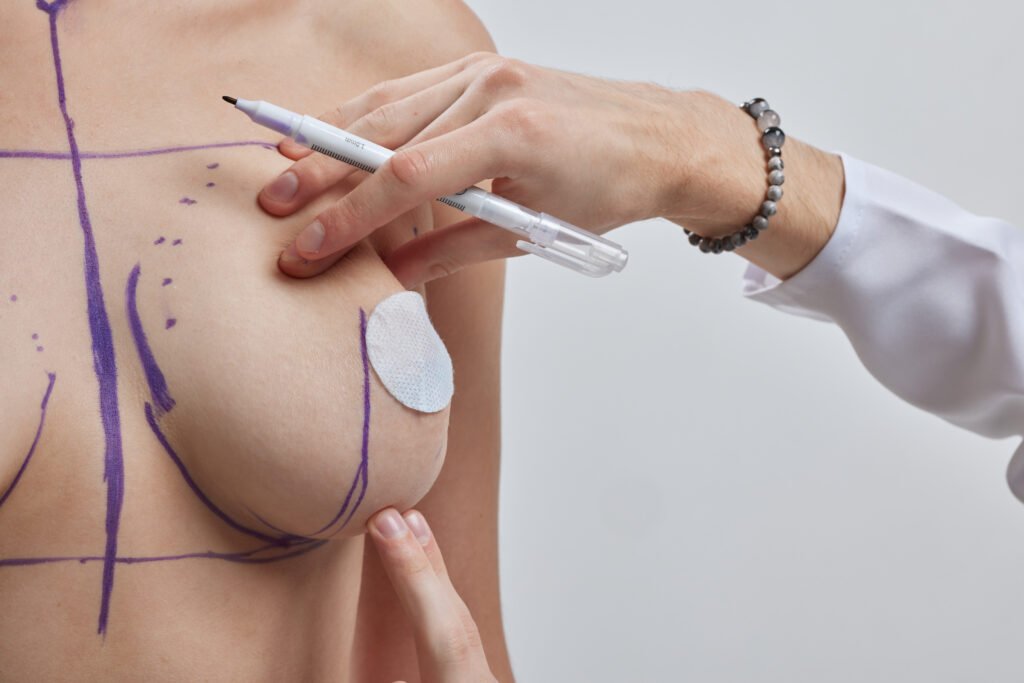
Breast Augmentation: Restoring Volume Without Correcting Sagging
A breast augmentation (commonly performed using silicone or saline implants) is designed specifically to increase the overall size, fullness, and projection of the breasts:
How It Works: The surgeon creates a discreet incision and places a sterile implant either directly behind the breast tissue (subglandular) or underneath the pectoral chest muscle (submuscular). This fills out the stretched skin envelope, adding prominent volume and restoring youthful upper-pole fullness.
The Limitations After Weight Loss: It is a common misconception that simply placing an implant will lift sagging breasts. If a patient with significant skin laxity and drooping undergoes only a standalone augmentation, the heavy implant inside a stretched skin envelope can actually weigh the breast down further over time, resulting in a “bottoming out” effect or a synthetic, unnatural appearance where the nipple continues to point downward while the lower breast is artificially filled.
Breast Lift (Mastopexy): Reshaping and Elevating Drooping Tissue
A breast lift (medically termed a mastopexy) is a purely structural reshaping procedure designed to correct sagging and restore an upright, youthful position:
How It Works: Unlike an augmentation, a breast lift does not add significant volume. Instead, the surgeon surgically removes excess, stretched skin, tightens the remaining skin envelope, reshapes the internal breast tissue into a firmer cone, and elevates the nipple-areola complex to a higher, more natural position on the chest wall.
The Limitations After Weight Loss: While a breast lift beautifully corrects sagging and repositioning, it does not restore lost volume. If your breasts were significantly deflated and emptied by weight loss, a lift alone will leave them sitting higher and neatly shaped, but they may remain small, flat, or hollow in appearance.
Tabular Comparison: Breast Augmentation vs. Breast Lift vs. Combination
To evaluate how these three surgical options compare across structural, aesthetic, and functional parameters for post-weight-loss patients, review the structured table below:

The Power of Combination Surgery: Why Most Weight Loss Patients Need Both
For the vast majority of patients who have undergone massive weight loss, neither a standalone augmentation nor a standalone lift is sufficient on its own. Their breasts suffer from a dual dilemma: they are both deflated (empty) and sagging (drooping):
The Synergy of Augmentation-Mastopexy: Combining both procedures in a single surgical session allows your plastic surgeon in Turkey to first elevate the nipple and remove excess lax skin, and then place a carefully proportioned implant inside the freshly tightened tissue.
Achieving Balanced Proportions: This comprehensive approach ensures your new breasts sit high and perky on your chest wall while possessing the soft, voluptuous fullness you desire, perfectly matching your newly contoured post-weight-loss physique.
Why International Patients Choose Turkey for Post-Weight-Loss Surgery
Undergoing complex post-weight-loss reconstructive surgery requires exceptional surgical skill, precise tissue management, and artistic vision. Patients worldwide choose Turkey for several undeniable clinical advantages:
Expertise in Massive Weight Loss Transformations: Plastic surgeons in Istanbul and Antalya possess extensive experience handling challenging post-bariatric anatomy, managing compromised skin elasticity, and executing complex combination surgeries safely.
All-Inclusive Medical Tourism Value: Comprehensive packages cover your surgical fees, JCI-accredited hospital stays, luxury 5-star hotel accommodations, VIP private airport transfers, and dedicated bilingual medical hosts, delivering 50% to 70% savings compared to Western healthcare systems.
Preparing for Your Procedure and Navigating the Recovery Journey
Embarking on your breast surgery journey in Turkey is structured to be seamless, transparent, and fully supported by your medical team:
Pre-Operative Stabilization: Surgeons require your weight to be stable for at least 3 to 6 months prior to surgery to ensure your tissues have settled completely.
The Recovery Timeline: Most patients stay in Turkey for 7 to 10 days post-surgery to allow for initial healing, drain removal (if required), and final medical clearance before flying home. Strenuous upper-body exercise is restricted for 4 to 6 weeks to ensure optimal scar maturation and implant settling.
Domande Frequenti (FAQ) / Frequently Asked Questions
1. How do I know if I need an implant or just a lift after weight loss?
If your breasts sit below the crease of your chest and your nipples point downward, you need a lift. If your breasts are also completely empty or hollow in the upper half, you will need a combination lift and augmentation to restore volume.
2. Can I get a breast augmentation without a lift if I have mild sagging?
In cases of very mild sagging (grade 1 ptosis), placing a moderate-profile implant can sometimes stretch the skin enough to disguise the drooping. However, a surgeon must evaluate your skin elasticity to confirm if an implant alone will suffice.
3. Will my insurance cover a breast lift or augmentation in Turkey?
Elective cosmetic procedures performed after weight loss are generally classified as aesthetic improvements and are rarely covered by standard health insurance policies. However, Turkish clinics offer all-inclusive packages that make these procedures remarkably affordable.
4. How long do breast implants last after a breast surgery?
Modern silicone gel implants are exceptionally durable and are designed to last for 15 to 20 years or more. They do not necessarily have an expiration date, though routine monitoring via regular checkups and imaging is recommended.
5. How long must I stay in Turkey for a combination lift and augmentation?
For a combination breast lift and augmentation, a medical stay of 7 to 9 days is strongly recommended. This provides adequate time for your initial post-operative checks, rest in a luxury hotel, and official clearance to fly.
6. How do I start planning my post-weight-loss breast surgery in Turkey?
Getting started is simple. Send high-resolution photographs of your chest from multiple angles along with your medical history to an accredited clinic in Turkey for a free online evaluation with an expert plastic surgeon.
Breast Augmentation vs. Breast Lift in Turkey: Which One Do You Need After Weight Loss?
Significant weight loss can change the shape, volume, and position of your breasts. If your breasts look smaller, less firm, or more sagging than before, breast augmentation and breast lift surgery in Turkey are two options worth exploring. The right procedure depends on whether your main concern is lost volume, excess skin, a lower breast position, or a combination of these changes.
Breast augmentation uses implants to increase breast volume and improve fullness. A breast lift (mastopexy) removes excess skin and repositions the nipple and breast tissue to create a firmer, more elevated appearance. If you have both volume loss and sagging, your surgeon may discuss combining the procedures, depending on your anatomy and medical suitability. Maintaining a relatively stable weight before surgery is also important, as further weight changes can affect your results. Learn more from the American Society of Plastic Surgeons’ guide to breast lift surgery.
At Cayra Clinic, you can explore our aesthetic surgery options in Turkey and receive personalised information about treatment planning and recovery.
Considering breast surgery after weight loss? Contact Cayra Clinic to discuss your goals and learn which options may be suitable for your individual needs.
