
Breast augmentation remains one of the most transformative and popular aesthetic procedures globally, providing enhanced volume, contour, and confidence to millions of women. However, a common misconception persists that breast implants are permanent life-long devices. In reality, major manufacturers and plastic surgery associations emphasize that breast implants have a functional lifespan, typically recommending formal evaluation or replacement around the 10 to 15-year mark.
As implants age beyond a decade, changes in breast tissue, skin elasticity, weight fluctuations, pregnancy, or natural capsule aging often prompt women to consider revision surgery. At this crossroads, patients face a fundamental medical decision: Should you simply exchange your old implants for modern cohesive gel implants, combine a replacement with a surgical breast lift (mastopexy), or choose complete implant removal (explantation)? When international patients seek master revision surgeons, advanced 3D imaging, capsulectomy expertise, and unmatched value, Turkey—and Istanbul in particular—stands out as the leading global destination. Let’s analyze candidate criteria, surgical options, recovery timelines, and cost advantages.
The 10-Year Milestone: Why Aging Implants Need Revision
Understanding why implants require attention after a decade involves both mechanical and biological factors:
Mechanical Wear and Rupture Risk: Over time, the silicone or saline outer shell experiences friction and degradation. While modern cohesive “gummy bear” implants carry very low silent rupture rates, older gel implants show higher rupture risk after 10 to 12 years.
Capsular Contracture Development: The body naturally forms a thin layer of scar tissue (capsule) around any implant. Over years, this capsule can thicken, contract, and harden (Baker Grade III/IV capsular contracture), causing distortion, firmness, and discomfort.
Natural Tissue Ptosis (Sagging): While implants remain fixed, natural breast tissue, muscle, and skin loosen with age, gravity, or weight changes. This often leads to a discrepancy between the implant position and the sagging natural tissue, creating a “snoopy-dog” or “double-bubble” shape.
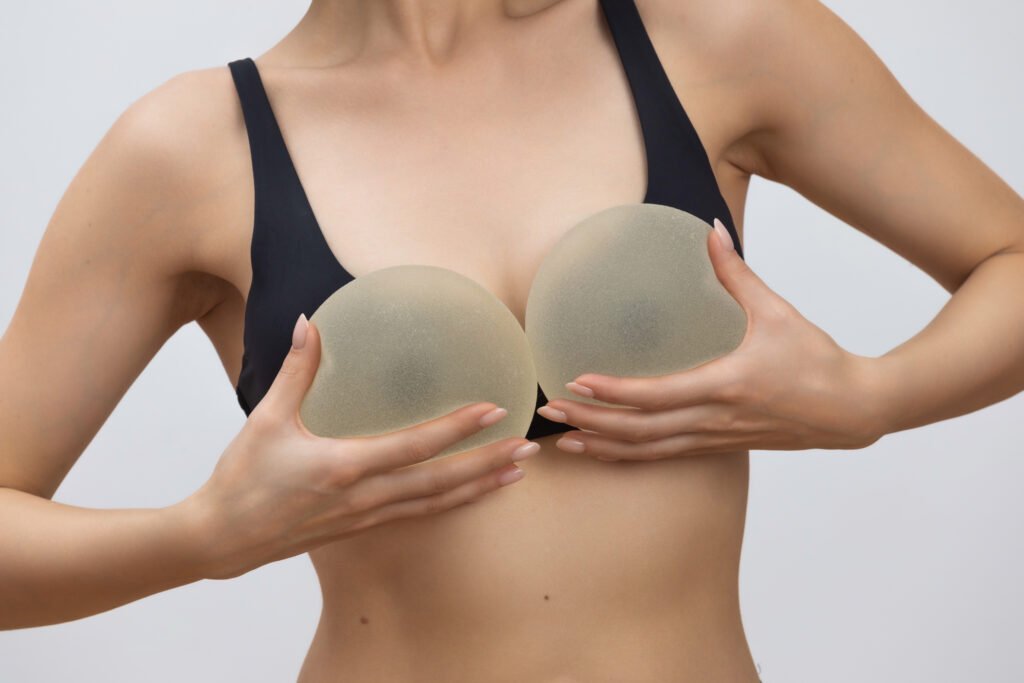
The Three Revision Pathways: Exchange, Lift, or Complete Removal
Choosing the correct surgical approach depends on your current anatomy, tissue elasticity, and aesthetic goals:
Option 1: Simple Implant Exchange (Replacement): Ideal for women who are satisfied with their breast height and position but want to replace old implants with modern, safer cohesive silicone gel implants, adjust volume, or correct early capsular firmness.
Option 2: Implant Exchange + Breast Lift (Mastopexy Revision): Recommended when skin laxity and sagging tissue have caused the nipple-areola complex to drop below the infra-mammary fold. The surgeon replaces the implants while removing excess stretched skin and reshaping native breast tissue for a youthful, elevated profile.
Option 3: Complete Removal (Explantation) with or without Fat Transfer: Chosen by women who prefer to live implant-free, suffer from severe recurrent contracture, or experience Breast Implant Illness (BII) symptoms. Surgeons remove the implant alongside the surrounding scar capsule (capsulectomy), often combining it with autologous fat grafting (lipofilling) to restore natural shape.
Tabular Comparison: Implant Exchange vs. Exchange + Lift vs. Complete Removal
To determine which revision procedure aligns best with your anatomical condition, consult the comparative table below:
Understanding Capsulectomy: Total, Partial, or En Bloc
In secondary breast surgery, managing the surrounding scar capsule is just as crucial as handling the implant itself:
Partial Capsulectomy: Only the thickened, tight, or calcified portions of the scar capsule are removed, leaving healthy, thin capsule tissue intact.
Total Capsulectomy: The entire scar tissue pocket surrounding the implant is surgically excised to create a fresh, clean pocket for new cohesive gel implants.
En Bloc Capsulectomy: The implant and the intact surrounding scar capsule are removed together as a single sealed unit. This specialized technique is essential in cases of implant rupture or suspected BIA-ALCL to prevent silicone gel or debris from touching surrounding tissues.
Tabular Comparison: Surgery Costs in UK/Europe/USA vs. All-Inclusive Packages in Turkey
International patients benefit from top-tier surgical expertise, JCI-accredited surgical suites, and transparent package rates when selecting Turkey for complex revision surgery:
| Evaluation Feature | Private Clinics in UK / EU / USA | All-Inclusive Packages in Turkey |
|---|---|---|
| Revision / Exchange Cost | $8,000 – $16,000+ (high facility and anesthesia surcharges). | Highly competitive ($3,200 – $5,200) complete package rate. |
| Combined Lift Surcharge | Adds $3,500 – $6,000 to base replacement cost. | Fully integrated into transparent combined revision package pricing. |
| Pre-Op MRI & Ultrasound | Billed separately; often requires multiple imaging appointments. | High-resolution ultrasound and pre-op clearance tests included in hospital. |
| Travel & Recovery Amenities | Patient manages local travel, transfers, and hotels independently. | Includes 5-star hotel accommodation, VIP private transfers, and translator. |

Recovery Protocol and What Results to Expect
Revision breast surgery requires experienced surgical hands and adherence to post-operative care:
Hospital Stay & Trip Duration: Patients traveling to Turkey should plan a stay of 7 to 9 days. This covers pre-operative consultations, high-resolution ultrasound evaluation, the revision surgery with a 1-night hospital stay, and post-operative drain removal and wound checks before flying home.
Post-Operative Recovery: Mild to moderate soreness and swelling are expected for the first 3 to 5 days, well managed with prescribed oral pain medication. Wearing a specialized surgical support bra 24/7 for 6 weeks is mandatory to support tissue positioning and pocket healing. Avoid heavy lifting (>5 kg>5 \text{ kg}) and strenuous upper-body workouts for 6 weeks.
Frequently Asked Questions (FAQ)
1. How do I know if my 10-year-old breast implants need to be replaced?
Common signs include changes in breast shape or firmness, asymmetry, persistent pain, visible rippling, or a lower nipple position. Even if you have no symptoms, an annual ultrasound or MRI is recommended after 10 years to screen for silent silicone ruptures.
2. Can I get a breast lift without replacing my implants?
Yes. If your current implants are intact, soft, and positioned well, a surgeon can perform a mastopexy (breast lift) using your existing implants. However, if the implants are over 10 years old, replacing them during the same surgery is strongly advised to avoid needing a second operation shorty after.
3. What is Breast Implant Illness (BII), and does explantation resolve it?
BII is a term used by patients to describe a range of systemic symptoms (such as chronic fatigue, brain fog, joint pain, and skin rashes) attributed to breast implants. Many women report significant improvement in these symptoms after undergoing complete explantation with total capsulectomy.
4. Will my breasts look completely flat if I choose total implant removal?
Removing implants will reduce breast volume. However, surgeons can perform autologous fat transfer (lipofilling)—harvesting fat via liposuction from your abdomen or thighs and injecting it into the breast tissue—or perform a tissue-rearranging mastopexy to create a natural, modest mound.
5. How long do modern cohesive gel implants last compared to older implants?
Modern 5th-generation cohesive gel implants (“gummy bear” implants) feature cross-linked silicone gel that retains its shape even if the shell is compromised. They are engineered for significantly greater durability and lower rupture rates than implants manufactured 10 to 15 years ago.
6. How do I start planning my breast implant revision in Turkey?
Getting started is simple and confidential. Send high-resolution photographs (front, profile, and three-quarter views) along with details about your original implant brand, volume, and age to an accredited clinic in Turkey. A board-certified plastic surgeon will provide a tele-consultation and custom revision plan.

Breast Implant Replacement in Turkey After 10+ Years: Exchange, Lift or Removal?
Breast implants do not automatically need replacing after 10 years, but changes in appearance, discomfort or implant complications may require assessment. Breast implant replacement in Turkey can involve exchanging the implants, combining replacement with a breast lift, or removing them altogether, depending on your needs.
The right option depends on your implant condition, skin elasticity, breast shape and personal preferences. Your surgeon may recommend imaging to check for silent rupture, particularly with silicone implants. Every procedure has potential risks, so an individual examination is essential.
Discover our aesthetic surgery treatments in Turkey and read the American Society of Plastic Surgeons’ guide to breast implants.
Considering your next step? Contact Cayra Clinic to discuss your options and receive personalised information about implant exchange, breast lift or removal.
