
Strabismus—commonly referred to as crossed eyes, wall eyes, or a squint—is frequently misperceived as a condition that strictly affects infants and young children. In reality, millions of adults live with eye misalignment, either carried over from uncorrected childhood strabismus or acquired later in life due to thyroid eye disease (Graves’ ophthalmopathy), stroke, head trauma, neurological disorders, or previous unsuccessful surgeries. For adults, living with misaligned eyes is far more than an aesthetic concern; it causes severe double vision (diplopia), depth perception loss, eye strain, and profound social or professional self-consciousness.
Many adults are mistakenly told by non-specialists that strabismus cannot be treated after childhood. This is a medical myth. Modern extraocular muscle surgery can successfully realign eyes in adults of any age, restoring visual coordination and confidence. When international patients seek world-class ophthalmic surgeons, advanced adjustable suture techniques, and unmatched value, Turkey—and Istanbul in particular—stands out as a premier global destination. Let’s analyze candidate selection, surgical methods, recovery expectations, and cost advantages.
Understanding Adult Strabismus: Causes and Functional Impact
To understand how surgical realignment works in mature eyes, it is essential to examine the underlying mechanisms governing eye movement:
The Extraocular Muscle Network: Each eye is precisely positioned and guided by six extraocular muscles. Strabismus occurs when these muscles lose their synchronized balance—one or more muscles pull too strongly, while opposing muscles are too weak or restricted, causing the eyes to turn inward (esotropia), outward (exotropia), upward (hypertropia), or downward (hypotropia).
Aesthetic and Functional Rehabilitation: In children, the brain copes with misalignment by suppressing the image from one eye to avoid confusion. In adults, whose brain visual pathways are fully matured, misaligned eyes create distressing double vision (diplopia). Surgery tightens, loosens, or repositions these muscles to restore parallel alignment, expand binocular field vision, and resolve chronic visual fatigue.
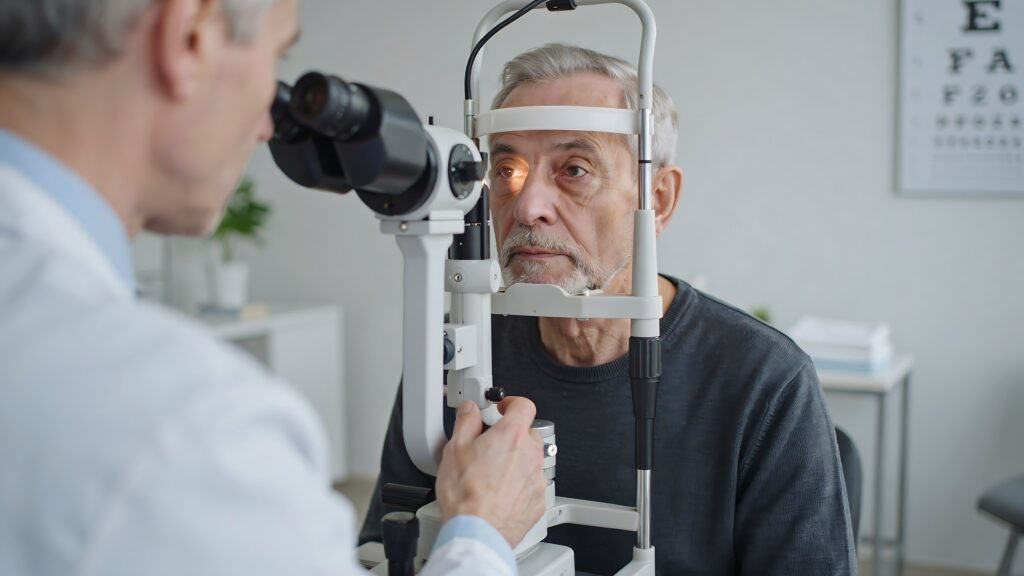
Advanced Surgical Techniques: Recession, Resection, and Adjustable Sutures
Adult strabismus surgery is a delicate, highly refined outpatient procedure performed under local or general anesthesia:
Muscle Recession (Loosening): If an extraocular muscle is overly tight or overactive, the surgeon detaches it from its original insertion point on the sclera (the white of the eye) and reattaches it further back, effectively weakening its pull and allowing the eye to drift into a centered position.
Muscle Resection (Tightening): If an extraocular muscle is weak, a small segment is removed to shorten it, strengthening its pulling power to pull the eye back into alignment.
Adjustable Suture Technique: This revolutionary technique is especially advantageous for adults. During surgery, the muscle is secured with a temporary, sliding knot. Hours later, while the patient is awake and comfortable under local numbing drops, the surgeon can fine-tune the thread tension to achieve perfect visual alignment and eliminate double vision before locking the knot permanently.
Tabular Comparison: Traditional Fixed Sutures vs. Adjustable Suture Surgery
To understand why adjustable suture techniques offer superior precision for adult squint correction, review the comparative table below:
Candidacy Evaluation: Am I a Candidate for Adult Strabismus Surgery?
Determining whether an adult is suitable for squint correction involves comprehensive diagnostic evaluations by specialized strabismologists:
Comprehensive Ophthalmic Examination: Candidates undergo orthoptic assessments, prism measurements in all gaze directions, motility testing, and fundus examinations to evaluate retinal fusion potential.
Medical Stability: Candidates whose strabismus stems from acquired neurological conditions, trauma, or thyroid eye disease should generally show stable alignment measurements for at least 3 to 6 months prior to surgical intervention to ensure predictable, long-lasting results.
Tabular Comparison: Strabismus Surgery in Europe/USA vs. Packages in Turkey
For international patients evaluating the financial and logistical benefits of traveling to Turkey for ophthalmic surgery, consult the following comparison:
| Criterio de Evaluación / Feature | Private Clinics in Europe / USA | All-Inclusive Medical Packages in Turkey |
|---|---|---|
| Average Cost (Per Eye / Both Eyes) | High ($4,500 – $9,000+ per eye); separate facility and anesthesia fees. | Highly competitive ($1,800 – $3,500 total) for complete procedure. |
| Pre-Operative Orthoptic Testing | Billed individually per diagnostic test and consultation visit. | Fully integrated into the single transparent package rate. |
| Hospital Standards | Excellent national ophthalmic surgical suites. | JCI-accredited specialty eye hospitals with advanced micro-surgery suites. |
| Travel and Accommodations | Patient manages hotels, transfers, and city transport independently. | Includes 4/5-star hotel, VIP airport transfers, and dedicated translator. |

What Results to Expect: Vision, Aesthetics, and Quality of Life
Understanding realistic surgical outcomes helps patients approach their surgery with complete confidence:
High Alignment Success Rate: Modern extraocular muscle surgery achieves satisfactory visual alignment in over 80% to 90% of adult cases after a single procedure, with remaining complex cases successfully adjusted via minor refinement.
Resolution of Diplopia: For patients suffering from double vision, proper muscular realignment restores single binocular vision in forward gaze, improving depth perception and eliminating head tilting habits.
Psychosocial Transformation: Correcting misaligned eyes in adulthood has a profound psychological impact, improving eye contact confidence, enhancing social interactions, and opening career opportunities previously hampered by visual embarrassment.
Recovery Timeline and Post-Operative Care Protocol
Healing from adult strabismus surgery is relatively fast, with minimal physical downtime:
Immediate Post-Op (Days 1–3): The whites of the eyes will appear red, and you may experience a mild scratching or foreign-body sensation, manageable with prescribed eye drops and mild analgesics.
Short Stay Requirement: Patients traveling to Turkey should plan a stay of 4 to 6 days. This allows for the initial surgery, same-day or next-day suture adjustments, and a comprehensive follow-up check before flying home.
Resuming Daily Activities: Most patients return to light desk work within 7 to 10 days. Swimming, heavy lifting, wearing contact lenses, and eye rubbing should be avoided for 3 to 4 weeks to ensure complete scleral healing.
Frequently Asked Questions (FAQ)
1. Is it true that adult strabismus surgery is purely cosmetic?
No. While eye alignment dramatically improves physical appearance, adult strabismus surgery is a functional, reconstructive procedure aimed at restoring binocular vision, expanding the visual field, eliminating double vision (diplopia), and reducing eye strain.
2. Can adult strabismus surgery fix amblyopia (lazy eye)?
Surgery realigns the physical positioning of the eyes, but it does not cure underlying amblyopia (reduced vision acuity in one eye caused by childhood visual suppression). However, realigning a “lazy eye” significantly improves peripheral field balance and cosmetic appearance.
3. How long do I need to remain in Turkey for strabismus surgery?
A medical trip duration of 4 to 6 days is ideal. This covers your initial orthoptic examination, the surgical procedure, suture adjustments, post-operative evaluation, and safe clearance for air travel (Fit to Fly).
4. Is the adjustable suture technique painful?
No. When suture adjustments are performed post-operatively, the eye is thoroughly numbed using anesthetic eye drops. Patients feel slight pressure, but no sharp pain during the adjustment process.
5. Will I need to wear glasses or a prism after strabismus surgery?
If you required glasses for refractive errors (such as nearsightedness, farsightedness, or astigmatism) before surgery, you will still need them afterward. In some complex cases, minor residual misalignment may be fine-tuned using mild prism lenses in your glasses.
6. How do I start planning my adult strabismus treatment in Turkey?
Getting started is easy. Send high-resolution photographs of your eye alignment in multiple gaze angles (looking straight, left, right, up, down) along with recent eye prescription records to an accredited clinic in Turkey for a free preliminary evaluation.

Adult Strabismus Surgery in Turkey: Improve Eye Alignment and Confidence
Adult strabismus surgery in Turkey can help improve eye alignment when the eyes point in different directions. Depending on the cause and severity, surgery adjusts the eye muscles to improve alignment, although it does not guarantee perfect alignment or eliminate every vision problem.
Cost and recovery depend on the surgical technique, medical assessment and services included. Temporary redness, discomfort or double vision may occur after surgery, and recovery varies between patients. An ophthalmologist will explain the expected results and whether additional treatment may be needed.
At Cayra Clinic, you can request information about treatment options in Turkey. For reliable guidance, visit the American Association for Pediatric Ophthalmology and Strabismus.
Take the first step towards better eye alignment. Contact Cayra Clinic to learn more and discuss your options with a medical professional.
