Understanding Gynecomastia
It is a condition that causes enlarged breast tissue in males. If you’re wondering, “Is gynecomastia normal?” the answer is: it depends. Enlarged male breasts are actually more common than you might think, especially during puberty. While it often resolves on its own, some men seek enlarged chest tissue surgery to address their concerns and achieve a more contoured chest appearance.
What Causes Excess Chest Tissue in Men?
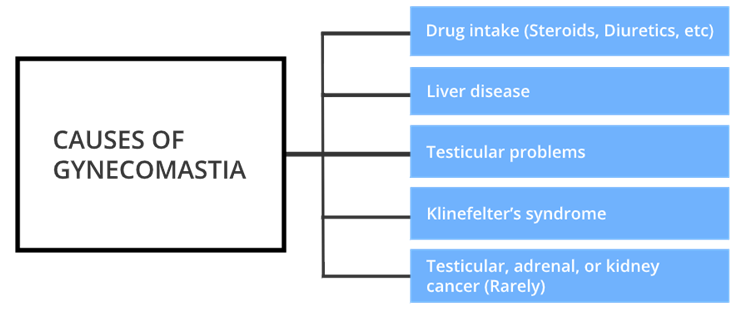
Enlargement of male breast tissue is most commonly linked to hormonal imbalance, particularly changes in estrogen and testosterone levels.
Other contributing factors may include:
Puberty-related hormonal fluctuations
Certain prescription medications
Underlying medical conditions
Lifestyle factors such as alcohol or substance use
Anabolic steroid use, especially among bodybuilders
Some men may also notice puffiness around the nipple area, which can further affect confidence and comfort.
Type of Treatments?
The surgery aims to correct enlarged breast tissue in men, creating a flatter and more masculine chest appearance. Here are the main surgical approaches:
Liposuction
This technique removes excess fat from the chest but doesn’t address glandular tissue. It involves small incisions and is often performed under local anesthesia with sedation. Recovery is usually fast with the use of a compression garment for a few weeks.
Gland Excision
If glandular tissue is the primary cause of the enlargement, it’s removed through a small incision, often made around the areola. This procedure may be combined with liposuction.
Combined Liposuction and Gland Excision
This approach is common and addresses both excess fat and glandular tissue for optimal results.
Important Notes:
Unilateral vs. Bilateral
The surgery can be performed on one breast (unilateral) or both (bilateral), depending on the individual’s needs.
Scars
Surgeons make incisions strategically to minimize scarring.
Recovery
Recovery time varies, but most patients can resume normal activities within a few weeks.
Consultation
It’s crucial to have a thorough consultation with a qualified surgeon to determine the most suitable surgical approach.
What Is The Procedure Like?
The surgery may involve liposuction, tissue excision, or both. Prior to the procedure, patients are advised to stop taking blood-thinning medications and avoid smoking to support proper healing.
The procedure generally includes the following steps:
- You’ll be put under general anesthesia for the procedure. In some circumstances, however, the surgeon may advise local anesthesia with sedation.
- If your procedure involves removing tissue, only tiny incisions for liposuction may be made. However, slightly bigger incisions will be made along the natural skin crease to remove glandular tissue.
- Through the incisions, the surgeon carefully removes fat and tissue. Gynecomastia surgery often involves both liposuction and glandular excision procedures.
- Liposuction involves removing excess fat through incisions made within the areola borders or beneath the breast. The procedure also helps contour the chest.
- After the procedure, the surgeon will close the incisions with internal and exterior sutures. They may also implant temporary drain tubes beneath the skin to collect extra fluid in the incision locations.
- You will muster a compression garment for a few weeks to tighten the contours. After the treatment, the drain pipes and incisions will be removed in one to ten days.
Recovery after Operation: What to Expect
Recovery plays a crucial role in achieving the best outcome. You’ll be advised to wear a compression shirt to minimize swelling and support the treated area.
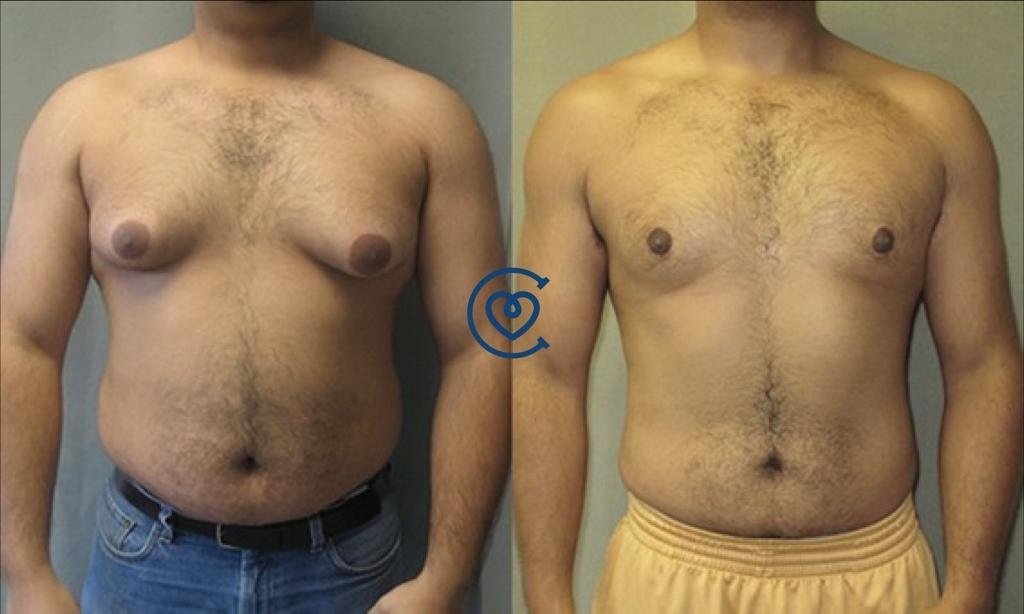
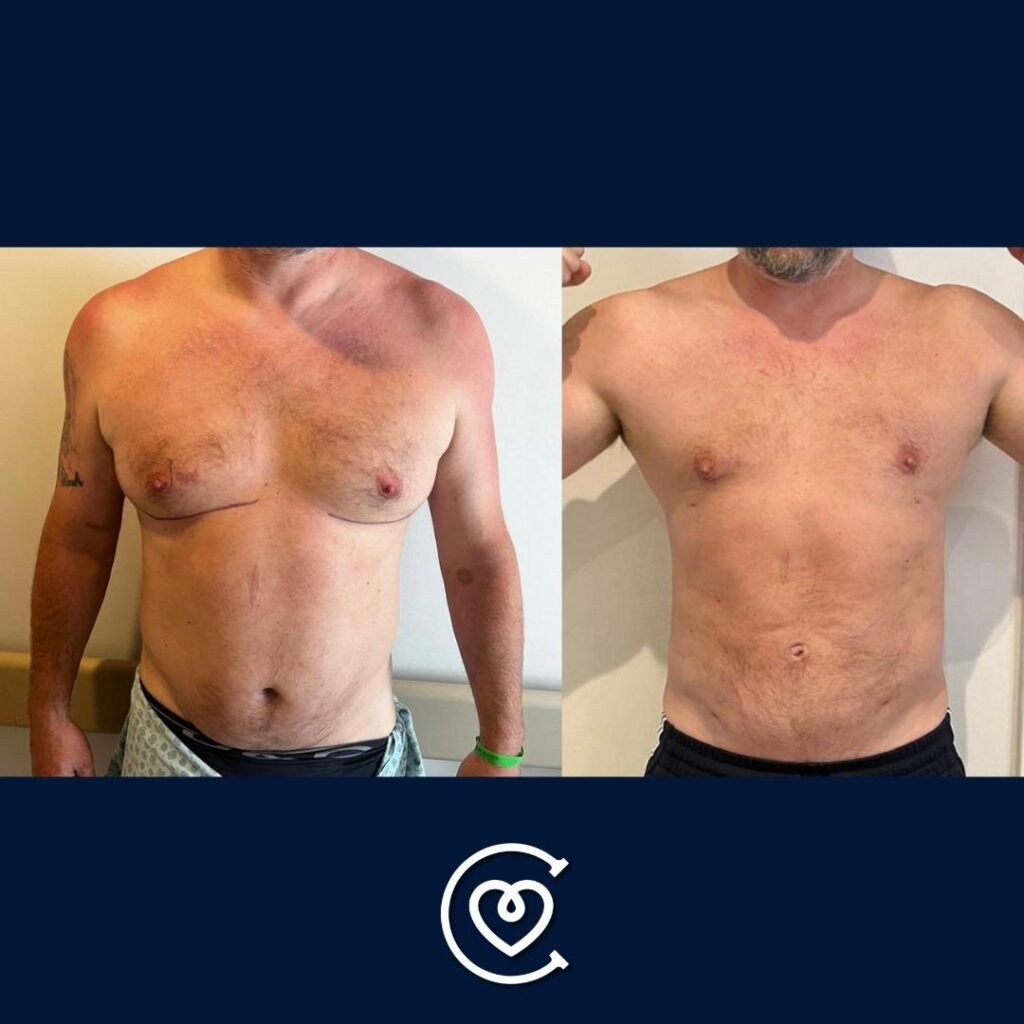
Most patients experience mild swelling, bruising, and discomfort in the first few days, which gradually improves. It’s important to follow your surgeon’s postoperative instructions carefully, including guidelines on rest, medication, and wound care. To get a better idea of the transformation possible, you can check our before and after photos at the end of this page.

Finding the Right Specialist
Choosing a bariatric surgery is a significant decision. It’s essential to find a qualified specialist who can guide you through the process and ensure the best possible results. When researching gynecomastia, you’ll find many experienced surgeons in major cities like Istanbul and Antalya.
When choosing a specialist, consider:
Proven experience with male breast reduction
Patient reviews and testimonials
Clear communication and personalized care
Feeling comfortable and confident with your surgeon is key to a positive experience.

Why Choose Cayra Clinic?
Cayra Clinic offers comprehensive gynecomastia treatment with a focus on safety, precision, and patient satisfaction. Our experienced surgical team uses modern techniques and advanced facilities to deliver natural-looking results.
One of the advantages of seeking treatment in Turkey is affordability without compromising quality. Cayra provides transparent pricing and personalized treatment plans tailored to each patient’s needs. To learn more about our clinic and surgical expertise, visit our About Us page.
Dive into informative articles and tips about our offered surgeries on our blog page. Contact Cayra Clinic today to discuss your gynecomastia treatment options.