
Can I Permanently Remove My Pubic Hairs?
Many people wonder if it is truly possible to have permanent pubic hair removal. For decades, shaving, waxing, and depilatory creams have been the most common methods, but they only provide short‑term results. Hair grows back quickly, often within days or weeks, and these methods can cause irritation, ingrown hairs, or even infections. This cycle of constant maintenance leads many patients to search for more reliable, long‑lasting solutions.
The interest in permanent hair removal is not only about aesthetics. For some, pubic hair causes discomfort during sports, irritation from tight clothing, or hygiene concerns. Others simply prefer the smooth look and want to avoid the hassle of repeated grooming. Whatever the reason, the demand for safe and effective permanent solutions has grown significantly, and medical clinics now offer advanced treatments that go beyond temporary fixes.
At Cayra Clinic, we believe patients deserve clear, evidence‑based information before making decisions about their body. That’s why we explain the difference between temporary methods and medical procedures such as laser hair removal or electrolysis. We also emphasize realistic expectations: “permanent” often means long‑term reduction rather than complete elimination. By understanding the options, risks, and outcomes, patients can make informed choices that align with their lifestyle and health goals.
Temporary vs. Permanent Solutions
Shaving and Waxing
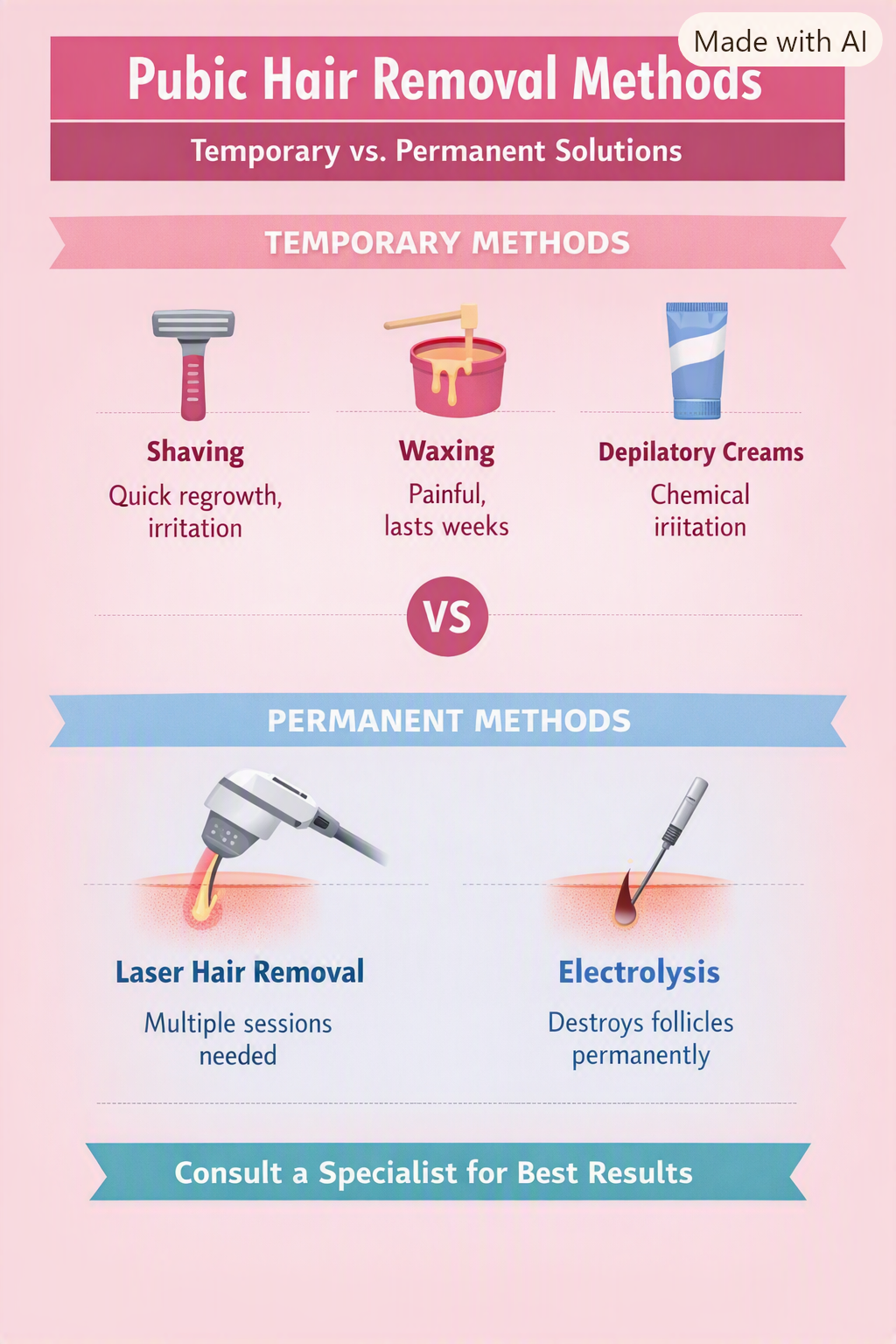
Shaving is the fastest and most accessible method, but it only removes hair at the surface. Regrowth usually occurs within 1–3 days, often accompanied by itching, razor burn, or ingrown hairs. Waxing lasts longer — typically 2–4 weeks — because it pulls hair out from the root. However, waxing can be painful, may cause irritation in sensitive areas, and repeated sessions are required to maintain smoothness. Both methods are temporary and do not affect the hair follicle itself, meaning hair will always grow back.
Depilatory Creams
Chemical depilatories dissolve hair at the skin’s surface. They are easy to use and can provide results lasting slightly longer than shaving. However, the pubic area is highly sensitive, and these creams may cause burning, redness, or allergic reactions. Patients with delicate skin often find depilatories unsuitable for intimate zones. Like shaving and waxing, creams do not target the follicle, so regrowth is inevitable.
Laser Hair Removal
Laser hair removal is one of the most popular long‑term solutions. It works by directing concentrated light into the hair follicle, damaging it and reducing future growth. Over multiple sessions — usually 6 to 8 spaced weeks apart — patients can achieve significant reduction in hair density and thickness. Results vary depending on skin tone, hair color, and hormonal balance. Dark, coarse hair responds best, while lighter or very fine hair may be more resistant. Although not always “permanent,” laser treatment can reduce hair growth by up to 80–90%, making it a highly effective option for many patients.
Electrolysis
Electrolysis is considered the only FDA‑approved permanent hair removal method. It involves inserting a fine probe into each hair follicle and applying electrical current to destroy the follicle completely. Unlike laser, electrolysis works on all hair types and colors. However, it is time‑consuming because each follicle must be treated individually, and multiple sessions are required to cover larger areas. Patients should also be aware of possible side effects such as temporary redness or swelling. Despite these challenges, electrolysis offers the most definitive solution for those seeking permanent removal.
Is “Permanent” Truly Permanent?
In medical terms, “permanent hair removal” usually refers to long‑term reduction rather than absolute elimination. Even the most advanced technologies cannot guarantee that every follicle will stop producing hair forever. Hormonal changes, genetics, and skin type all influence regrowth. For example, laser treatments can achieve up to 80–90% reduction, but new hair may appear over time, especially after hormonal fluctuations such as pregnancy or menopause.
Electrolysis remains the only FDA‑approved method for true permanent removal. It destroys each follicle individually using electrical current, preventing future growth. However, the process is labor‑intensive and not always practical for larger areas like the pubic region. Patients should set realistic expectations: permanent removal is achievable, but maintenance sessions may still be required to preserve smoothness.
Interestingly, the same principle of targeting hair follicles applies in the opposite direction during hair transplantation. In procedures such as FUE (Follicular Unit Extraction), healthy follicles are taken from donor areas — typically the back of the scalp — and implanted where hair is missing. These transplanted follicles continue to grow naturally for life. So while some patients seek to permanently remove unwanted hair, others visit Cayra Clinic to restore hair density and confidence through advanced transplantation techniques. Whether your goal is removal or restoration, Cayra Clinic provides both ends of the spectrum — safe, effective, and personalized solutions for every patient.
Safety and Considerations
When thinking about permanent pubic hair removal, safety should always come first. The pubic area is one of the most sensitive regions of the body, and not every method is suitable for every patient. Skin sensitivity plays a major role: some women may experience redness, irritation, or even scarring if procedures are performed incorrectly or without proper medical supervision. That’s why professional evaluation is essential before starting any treatment.
With laser hair removal, the main risks include burns, pigmentation changes, or uneven results if the procedure is done by unqualified providers. The effectiveness of laser also depends on skin type and hair color — darker hair responds better, while lighter or very fine hair may be more resistant. Patients should be aware that multiple sessions are required, and results may vary. Choosing a clinic with experienced specialists greatly reduces these risks and ensures safer outcomes.
Electrolysis offers more lasting results, but it comes with its own considerations. The treatment is time‑consuming, as each follicle must be targeted individually, and the overall cost can be higher compared to laser. Temporary swelling or redness is common, and patients need to commit to multiple sessions for full coverage. At Cayra Clinic, consultations include a thorough assessment of skin type, medical history, and patient goals. This ensures that the chosen method — whether laser, electrolysis, or even non‑surgical alternatives — is not only effective but also safe.
Alternatives, Patient Guidance, and Trusted Resources
Not every patient requires complete pubic hair removal. For some, trimming or partial reduction provides enough comfort and hygiene benefits without the risks of aggressive procedures. Minimally invasive options such as laser rejuvenation, physiotherapy, or injection‑based treatments can improve tissue quality and reduce discomfort. During consultation, Cayra Clinic specialists explain all available methods — from non‑surgical to surgical — so patients can choose what truly fits their lifestyle and health goals.
For those exploring aesthetic treatments in Turkey, we recommend learning more about our services:
To strengthen trust, we also provide references from independent medical authorities:
American Academy of Dermatology — guidance on hair removal methods.
FDA Electrolysis Information — official details on permanent hair removal approval.
By combining internal resources with external references, patients receive balanced, transparent information. This ensures that every decision — whether choosing a non‑surgical alternative or considering permanent removal — is made with confidence and supported by both Cayra Clinic expertise and international medical standards.
