
Embarking on a journey to refresh your appearance with a mini facelift is an exciting step toward renewed confidence and youthfulness. Because a mini facelift focuses primarily on the lower third of the face—addressing emerging jowls, soft jawlines, and mild neck laxity through shorter incisions—its physical footprint is significantly smaller than that of a traditional full facelift. Consequently, the healing process is faster, smoother, and less invasive.
However, understanding what to expect during each stage of healing is vital for achieving optimal aesthetic results. As international patients increasingly choose Turkey for its world-class medical tourism infrastructure, elite board-certified surgeons, and luxury all-inclusive recovery packages, knowing your precise post-op timeline—especially regarding when it is safe to board a flight home—becomes essential for a stress-free experience. Let’s break down the recovery journey week by week.

Immediate Post-Op & Days 1–3: The Acute Healing Phase
The first 72 hours following your mini facelift procedure represent the acute recovery phase, during which your body initiates its natural tissue repair mechanisms:
What to Expect: Right after surgery, you will wake up wearing a soft supportive facial wrap or compression bandage designed to minimize early swelling and stabilize the newly lifted SMAS tissues. Mild to moderate tightness, bruising around the ears and jawline, and dull soreness are completely normal and easily managed with prescribed oral medications.
Crucial Care Tips: Keep your head elevated at a 30-to-45-degree angle using multiple pillows or a reclining chair both day and night. Apply cold compresses gently around the cheeks (avoiding direct pressure on the suture lines) as instructed by your medical team. Rest is your absolute priority during these initial days.
Days 4–7: Subsiding Swelling and the First Medical Checkup
As you transition toward the end of your first week, the most intense inflammatory response begins to recede rapidly:
What to Expect: Bruising often shifts colors from deep purple or blue to softer shades of yellow and green as hemoglobin reabsorbs into the body. Facial tightness persists, but sharp discomfort typically fades away entirely.
The Milestone Checkup: Around day 5 to 7, you will return to the clinic for your vital post-operative evaluation. The plastic surgeon will inspect the incision sites, remove any non-dissolvable sutures or staples, and clear you to remove your heavy compression garments for longer periods. This is also the moment when international patients receive their official medical clearance to travel.
Tabular Comparison: Mini Facelift Recovery Milestones
To help you track your physical progress and plan your time off work or travel logistics, review the milestone breakdown table below:
Week 2: Returning to Daily Routines and Light Social Life
Entering the second week marks a major turning point where you begin feeling like your normal self again:
What to Expect: Most of the visible bruising can now be easily covered with lightweight mineral makeup. While minor, subtle swelling may linger around the jawline, it is generally unnoticeable to casual observers. Numbness in front of the ears is common and temporary as nerve endings regenerate.
Activity Adjustments: You can safely return to light desk work, administrative tasks, and short outdoor walks. However, bending over, lifting heavy objects, and wearing pullover clothing that strains the neck must still be strictly avoided.

Weeks 3–4: Tissue Softening and Nervous Regeneration
By the end of the first month, internal healing progresses significantly beneath the surface:
What to Expect: The skin and underlying SMAS layer begin to soften and settle into their new, elevated positions. Any residual tightness in the neck or cheeks eases considerably, and facial expressions feel entirely natural and fluid.
Skincare & Grooming: You can typically resume gentle facial cleansing, moisturizing, and hair coloring (with surgeon approval, avoiding harsh chemicals near incision lines). Scar massage with recommended silicone gels or medical-grade oils can begin to accelerate scar maturation.
The Burning Question: When Can You Safely Fly Home?
For patients traveling to Turkey for their mini facelift, flight safety is paramount:
The 5-to-7-Day Rule: Reputable clinics and board-certified plastic surgeons universally agree that international patients should wait until at least day 6 or 7 before taking a commercial flight home.
Why This Timeline Matters: Cabin pressure in commercial aircraft can occasionally exacerbate residual tissue swelling. Waiting until your initial checkup—where sutures are removed, incisions are verified as secure, and any trapped fluid is checked—ensures you are medically stable. Furthermore, traveling with a “Fit to Fly” certificate issued by your surgeon provides complete peace of mind.
Weeks 5–12 and Beyond: Final Results and Long-Term Maintenance
Reaching the two-to-three-month mark reveals the stunning, long-lasting transformation you traveled for:
The Final Reveal: Over 90% of all post-op swelling dissipates by week 6, with the remaining micro-swelling resolving fully over the following months. Your jawline appears crisp, jowls are eliminated, and your profile looks naturally refreshed.
Protecting Your Investment: Maintain your gorgeous results by committing to daily broad-spectrum sunscreen use, wearing hats outdoors, maintaining a stable weight, and adopting a nourishing skincare regimen rich in antioxidants and hydration.
Domande Frequenti (FAQ) / Frequently Asked Questions
1. Is a mini facelift painful during the recovery period?
Most patients report that a mini facelift is surprisingly comfortable. Rather than sharp pain, the sensation is described as a dull tightness or pulling feeling, which is easily controlled with mild oral analgesics prescribed by your surgeon.
2. Can I wear makeup while my stitches are still in place?
You should never apply makeup directly over fresh, unhealed incision lines while sutures are still in place, as this can introduce bacteria and cause infection. Once sutures are removed around day 7, gentle mineral makeup can be worn safely.
3. What precautions should I take during my flight home?
When flying home around day 6 or 7, stay well-hydrated by drinking plenty of water, avoid alcoholic or caffeinated beverages, wear compression stockings if prone to circulation issues, and take short, gentle walks up and down the aircraft aisle.
4. When can I resume strenuous exercise at the gym?
Light walking is encouraged immediately, but high-intensity workouts, heavy weightlifting, running, and bending over vigorously must be avoided for at least 4 to 6 weeks to prevent blood pressure spikes and swelling.
5. Will my scars be noticeable after recovery?
Mini facelift incisions are expertly placed within natural creases around the ear and hairline. As the fine scars mature over 3 to 6 months, they fade dramatically and become virtually undetectable to anyone.
6. What support do I have if I have a question after returning home?
Accredited medical tourism clinics in Turkey provide continuous post-operative support. You maintain direct communication with your medical team and English-speaking coordinators via WhatsApp or video calls whenever you need reassurance.
Mini Facelift Recovery: Week-by-Week Guide and When You Can Fly Home
Planning a mini facelift in Turkey? Understanding the recovery timeline can help you organise your stay and return journey with greater confidence. During the first few days, swelling, bruising and tightness are common, while visible improvements develop gradually over the following weeks.
Most patients need time to rest and attend follow-up appointments before travelling home. The exact recovery period varies depending on the procedure and individual healing. Before booking your flight, obtain clearance from your surgeon and discuss any travel-related precautions. The American Society of Plastic Surgeons provides further guidance on facelift recovery.
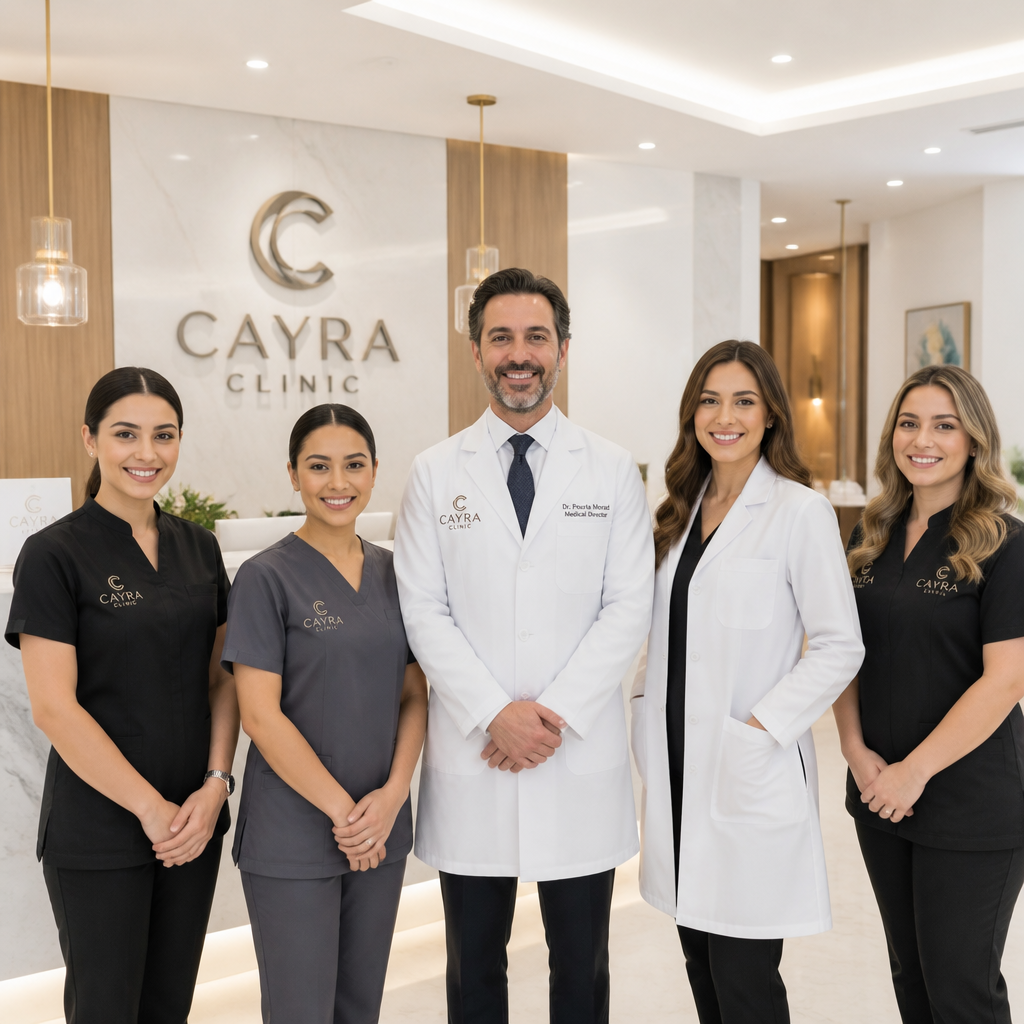
At Cayra Clinic, you can explore aesthetic treatments in Turkey and receive information to help plan your treatment and recovery. You can also discover our services for hair transplantation and dental treatments.
Considering a mini facelift abroad? Contact Cayra Clinic to learn more about treatment planning, recovery expectations and how to organise your stay in Turkey before returning home.
