
For decades, fashion trends have dictated drastic shifts in brow shapes—from the razor-thin arches of the 1990s to the thick, laminated, or microbladed styles of recent years. Unfortunately, years of aggressive waxing, chronic over-plucking, or repeated semi-permanent cosmetic procedures (such as microblading, nano-blading, or poorly performed tattooing) can take a permanent toll on your natural facial aesthetics. When hair follicles are traumatized or scarred over time, they often stop growing back entirely, leaving behind patchy, sparse, or permanently damaged eyebrows.
While topical serums, daily pencils, and temporary makeup offer short-term camouflage, achieving a natural, permanent, and maintenance-free solution requires advanced medical intervention. Today, eyebrow hair transplantation in Turkey has emerged as the global gold standard for restoring lush, perfectly proportioned brows. Let’s explore how the procedure works, how it corrects over-plucking and failed microblading, and what you can expect.
The Anatomy of Brow Loss: Why Over-Plucking and Microblading Leave Scars
Understanding why natural brows fail to regrow helps clarify why topical treatments ultimately fall short:
The Damage of Over-Plucking: Repeatedly yanking hairs from the root damages the microscopic dermal papilla. Over years, this chronic trauma causes follicular miniaturization and scar tissue formation, permanently shutting down hair production.
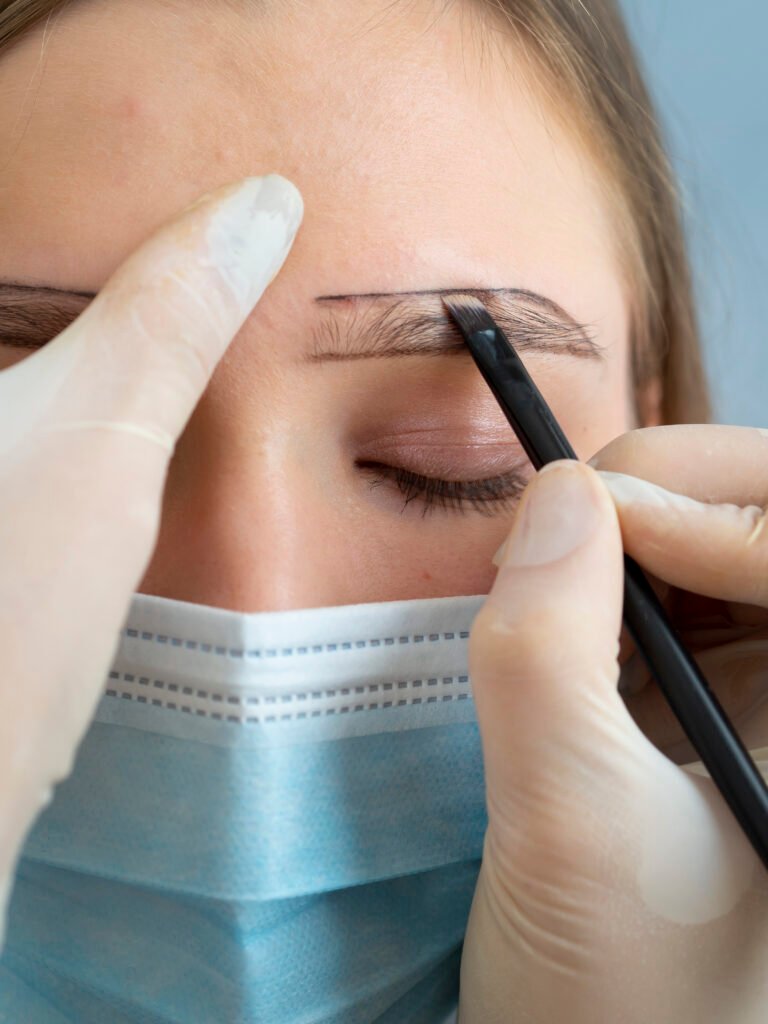
The Impact of Failed Microblading: Microblading involves making tiny cuts in the skin to deposit pigment. When performed too deeply, repeatedly, or aggressively, it causes localized fibrosis (scarring beneath the skin). This scar tissue blocks natural hair regrowth and prevents pigment from holding evenly, resulting in bluish discoloration, blurred strokes, or patchy bald spots.
What Is an Eyebrow Hair Transplant? Technique and Precision
An eyebrow transplant is a highly delicate, artistic, and specialized micro-surgical procedure designed to recreate natural brow density using your own living hair follicles:
Donor Harvesting (FUE Method): Using the Follicular Unit Extraction (FUE) technique, individual hair grafts—typically harvested from the back of the scalp (the nape or lower occipital region, where hairs are finest and match brow texture best)—are carefully extracted one by one.
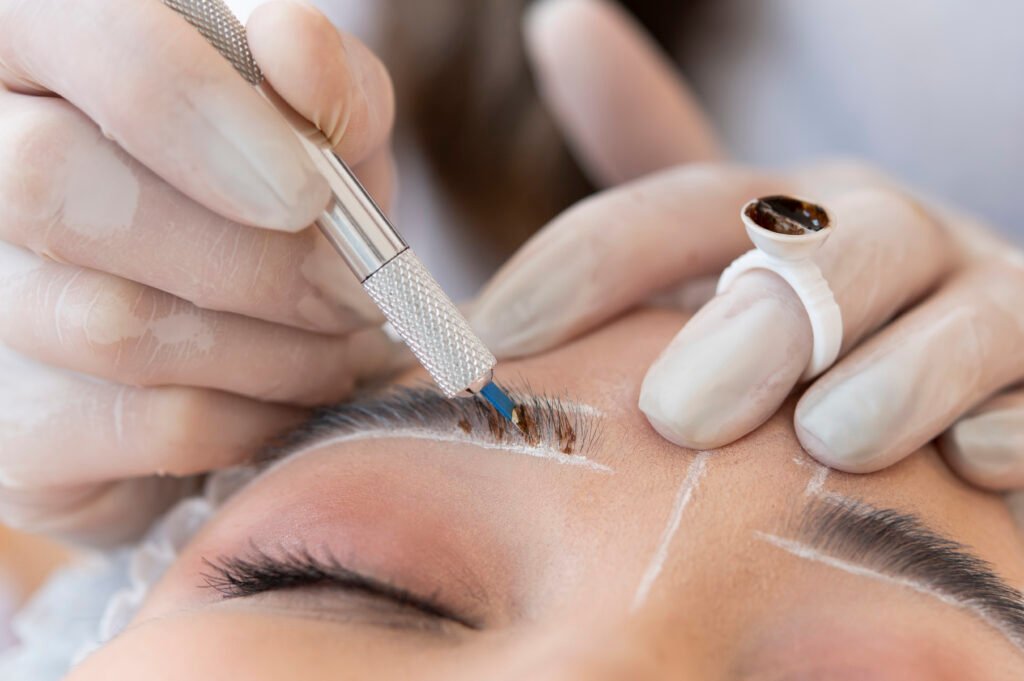
The Art of Angling: Unlike scalp hair that grows vertically, eyebrow hairs lie remarkably flat against the skin, exiting at extremely acute angles (often between 10 to 15 degrees) and changing direction across different zones of the brow. A master surgeon meticulously creates micro-slits matching these exact angles so the new hairs grow in harmony with your facial contours.
Eyebrow Transplant vs. Microblading and Makeup
To evaluate how permanent surgical restoration contrasts with temporary cosmetic fixes, review the structured table below:
| Evaluation Parameter | Permanent Eyebrow Transplant | Microblading & Cosmetic Tattooing | Daily Makeup & Pencils |
| Longevity of Results | Permanent (hairs grow naturally for a lifetime). | Temporary (fades completely within 1 to 3 years). | Temporary (lasts only until washed off at the end of the day). |
| Texture and Dimension | Real, 3D textured hair with natural sheen and movement. | Two-dimensional pigment drawn onto flat skin. | Powder or waxy texture applied topically. |
| Correction of Scar Tissue | Effectively covers scars and fills in fibrous microblading blanks. | Can struggle to adhere properly over dense scar tissue. | Requires daily reapplication and touch-ups. |
| Long-Term Cost Efficiency | One-time investment with lifelong results. | Requires endless annual touch-up sessions and pigment refreshes. | Ongoing monthly purchases of cosmetics and brow kits. |
Correcting Failed Microblading: Can You Transplant Over Scar Tissue?
One of the most common questions patients ask is whether hair can successfully grow over skin previously damaged by microblading:
Evaluating Fibrosis: During your pre-operative consultation, your surgeon will assess the elasticity and vascularity of the brow skin.
Specialized Placement: While scar tissue has a lower blood supply than virgin skin, expert surgeons utilize refined micro-grafts and specialized placement techniques to ensure high graft survival rates, successfully camouflaging old microblading scars beneath lush, natural hair.
The Recovery Timeline: Healing and Shedding Phases
Understanding the healing process helps manage expectations during the months leading up to your final results:
Days 1 to 7 (Initial Healing): Tiny micro-scabs form around each implanted hair graft and flake off naturally within the first week. Redness in the brow area subsides quickly.
Weeks 2 to 4 (The Shock Loss Phase): Do not panic! Just like scalp transplants, the newly transplanted hairs enter a resting phase and fall out. This is a normal biological mechanism; the underlying roots remain safely embedded beneath the skin.
Months 3 to 5 (New Growth Begins): New, permanent hairs begin sprouting through the skin surface, initially appearing fine and soft.
Months 9 to 12 (Final Maturation): Your new eyebrows achieve full density, thickness, and length. Because scalp hair continues to grow when transplanted to the brow area, you will need to trim your eyebrows periodically with small scissors to keep them neatly styled!
Why International Patients Choose Turkey for Eyebrow Restoration
When performing high-stakes facial procedures requiring intense artistic precision, patients worldwide look to Turkey as the undisputed global capital:
Mastery in Facial Aesthetics: Turkish plastic surgeons and medical teams possess unparalleled experience in designing bespoke, gender-appropriate brow shapes that complement unique facial bone structures.
All-Inclusive Medical Tourism Packages: Comprehensive packages seamlessly cover your surgical fees, JCI-accredited hospital procedures, luxury 5-star hotel accommodations, VIP private airport transfers, and dedicated bilingual medical hosts.
Planning Your Procedure: From Online Consultation to Your New Brows
Embarking on your journey to restore your eyebrows is structured to be smooth, transparent, and entirely centered around your aesthetic vision:
Virtual Assessment: Share high-resolution, makeup-free photographs of your brows from multiple angles along with your medical history.
Bespoke Design: Upon arriving in Turkey, your surgeon works directly with you, drawing and mapping out custom brow arches that match your facial symmetry and personal preferences.
The Procedure & Return Home: The painless, local-anesthesia session takes roughly 3 to 4 hours. After a brief recovery and final wash check, you are cleared to fly home with a stunning, permanent transformation.
Domande Frequenti (FAQ) / Frequently Asked Questions
1. Will my transplanted eyebrow hairs keep growing long like scalp hair?
Yes. Because the donor follicles are harvested from the scalp, the transplanted hairs retain their original genetic programming and will continue to grow long. You will simply need to trim your eyebrows every few weeks with small grooming scissors.
2. Is an eyebrow hair transplant painful?
The procedure is performed under local anesthesia. Thanks to modern, virtually painless anesthetic delivery systems, patients feel no pain during the extraction and implantation phases, often relaxing, listening to music, or watching a movie.
3. Can an eyebrow transplant cover my old microblading or tattoo ink?
Yes. The density of the newly transplanted hair follicles effectively obscures and distracts from old faded pigment, patchy microblading strokes, or underlying scar tissue, creating a fully natural 3D appearance.
4. How many hair grafts are typically needed for an eyebrow transplant?
Depending on whether you are filling in sparse outer tails or reconstructing an entire brow from scratch, most procedures require between 200 to 400 grafts total (roughly 100 to 200 individual hairs per eyebrow).
5. When can I shape, pluck, or dye my new eyebrows?
You must avoid plucking, waxing, threading, or applying chemical dyes to your newly transplanted eyebrows for at least 3 to 4 months until the follicles are completely anchored and stable.
6. How do I start planning my eyebrow transplant trip to Turkey?
Getting started is effortless. Send clear, makeup-free photographs of your brows to an accredited clinic in Turkey to schedule your free online consultation and receive your personalized all-inclusive treatment plan.
Eyebrow Transplant in Turkey: Restoring Density After Over-Plucking or Failed Microblading
Over-plucking, naturally sparse eyebrows, scars, or disappointing microblading results can leave brows looking uneven or less defined. An eyebrow transplant in Turkey may offer a long-term option for restoring density by transferring hair follicles, usually from the scalp, to carefully selected areas of the eyebrows. The aim is to create a shape that complements your facial features while maintaining a natural appearance.
The procedure requires detailed planning because eyebrow hairs grow at specific angles and directions. Transplanted hairs may initially shed before new growth begins, and the final result develops gradually over several months. Since donor hairs come from the scalp, they may continue growing longer than natural eyebrow hairs and require regular trimming. If you have had microblading, a specialist should assess your skin and any scarring before treatment. Learn more about hair loss and treatment options from the American Academy of Dermatology.
At Cayra Clinic, you can explore our hair transplantation services in Turkey and receive personalised information about the assessment process and available techniques.
Ready to explore fuller, more defined eyebrows? Contact Cayra Clinic to discuss your goals and find out whether an eyebrow transplant may be suitable for you.
