
For many men and women experiencing progressive hair loss, a first hair transplant is a life-changing milestone that restores a strong frontal hairline and youthful facial framing. However, hair loss is a chronic, progressive biological condition. As native, non-transplanted hair continues to thin over time behind the initial graft placement, or if the original procedure lacked sufficient density across the crown (vertex), patients frequently consider undergoing a second hair transplant (revision or touch-up procedure).
While a second procedure can seamlessly fill remaining thin areas and boost overall volume, the single most critical factor determining its feasibility is the health and capacity of your donor area (the safe zone at the back and sides of the scalp). Because donor hair is a finite natural resource, careful evaluation is essential to avoid over-harvesting, patchy scarring, or donor depletion. When international patients seek master hair restoration surgeons, trichoscopic mapping, and exceptional value, Turkey—and Istanbul in particular—stands as the world’s premier destination for complex secondary hair transplants. Let’s analyze donor graft reserves, over-harvesting prevention, alternative donor sources, and recovery expectations.
Understanding Donor Capacity: The Biological Limits of Scalp Hair
Before scheduling a second procedure, it is vital to understand how hair follicles are distributed across the scalp and what constitutes a safe donor harvest:
Total Scalp Donor Reserve: A typical, healthy human scalp contains between 6,000 and 8,000 harvestable follicular unit grafts in the permanent donor zone (the occipital and temporal regions immune to dihydrotestosterone/DHT).
The Safe Extraction Threshold: During a primary FUE (Follicular Unit Extraction) procedure, surgeons generally extract between 2,500 and 4,000 grafts. Extracting more than 50% of the total donor density in a single session or across multiple sessions risks making the donor area look visibly thin, moth-eaten, or patchy.
Evaluating Remaining Density: Calculating how many grafts remain requires evaluating donor hair caliber (thickness), native hair groupings (single, double, or triple-hair grafts), and the degree of healing from your first surgery.
Evaluating Your Scalp: How Surgeons Assess Remaining Donor Reserves
Determining eligibility for a second hair transplant involves sophisticated diagnostic analysis performed by expert trichologists:
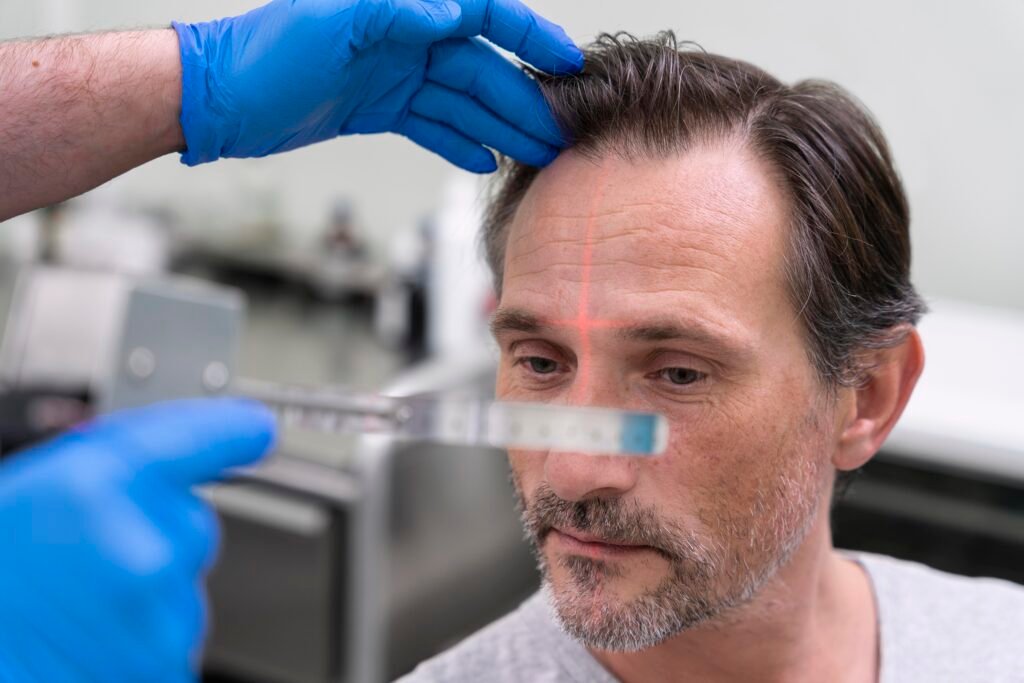
Digital Micro-Trichoscopy: Using high-magnification trichoscopic cameras, surgeons analyze donor hair density per square centimeter (cm2cm^2), measuring exact follicle spacing and identifying any scarring or transection from the primary procedure.
Donor Elasticity and Scalp Health: Surgeons evaluate dermal tissue healing. If your first procedure caused excessive fibrotic scarring or decreased blood supply, harvesting additional grafts requires specialized micro-punch sizes (0.7mm−0.85mm0.7mm – 0.85mm) to protect surrounding follicles.
Tabular Comparison: Primary vs Secondary Hair Transplant Dynamics
To understand how a secondary procedure differs clinically from your initial hair transplant, review the comparison below:
Preventing Over-Harvesting: The Golden Rules of Donor Preservation
Over-harvesting occurs when too many grafts are removed from a concentrated area, damaging the donor site permanently. Elite surgeons in Turkey adhere to strict preservation protocols:
The Homogeneous Extraction Pattern: Grafts must be harvested in a diffuse, checkerboard pattern across the entire safe donor zone rather than clustering extractions in one area, ensuring overall donor density remains natural and uniform.
Preserving Visual Density: To keep the donor area looking natural under short haircuts, surgeons maintain a minimum density of at least 30 to 35 follicular units per square centimeter.
Alternative Donor Sources: Utilizing Beard and Body Hair
When scalp donor reserves are depleted or insufficient to meet visual density goals, advanced surgeons utilize body hair transplantation (BHT):
Beard Hair Graft Harvesting: The submental area under the jaw line (beard donor) provides thick, high-caliber single-hair grafts with robust growth cycles. Beard grafts are ideal for adding dense volume to the crown or mid-scalp when blended with remaining scalp hair.
Chest Hair Grafts: Chest hair can serve as a supplementary donor source for soft, fine filler hair, though it features shorter growth cycles and lower survival rates than beard or scalp hair.
Tabular Comparison: Procedure Costs in Western Europe/USA vs All-Inclusive Packages in Turkey
International patients benefit from world-class surgical artistry and significant savings when choosing specialized hair restoration centers in Turkey:
| Evaluation Feature | Private Clinics in Europe / UK / USA | All-Inclusive Packages in Turkey |
|---|---|---|
| Cost for Secondary Procedure | High ($6,000 – $14,000+); charged strictly per graft. | Highly competitive ($2,200 – $3,500) all-inclusive package rate. |
| Donor Evaluation Tech | Basic visual evaluation; advanced mapping billed extra. | Integrated high-resolution trichoscopy and donor mapping included. |
| Body Hair Extraction Fee | Heavy surcharge applied for beard or chest graft extraction. | Beard graft harvesting included within package scope when needed. |
| Travel and Accommodations | Patient manages local transit and hotels independently. | Includes 5-star hotel, VIP private airport transfers, and translator. |
Recovery Timeline and Optimal Timing Between Procedures
Timing your secondary procedure correctly is crucial for protecting scalp health and achieving seamless density:
Minimum Interval Between Transplants: You must wait at least 12 to 18 months after your first hair transplant before undergoing a second surgery. This allows transplanted follicles to complete their full growth cycle and ensures donor area inflammation and vascularity have completely normalized.
Post-Operative Recovery: The recovery timeline for a second hair transplant mirrors the first: initial micro-scabs shed within 10 to 14 days, followed by a temporary shock-loss shedding phase at weeks 3 to 6. New permanent growth emerges at months 3 to 4, with final mature density achieved at 12 to 15 months.
Frequently Asked Questions (FAQ)
1. How many grafts can safely be taken in a second hair transplant?
Most patients with healthy initial donor recovery can safely yield between 1,200 and 2,500 grafts in a second session. The exact number depends on your remaining native density and whether beard hair donor sources are utilized.
2. Can beard hair be mixed with scalp hair during a second transplant?
Yes. Beard hair grafts are excellent for adding structural volume to the crown and mid-scalp. However, because beard hair is naturally coarser, surgeons blend beard grafts alongside softer scalp grafts to maintain a smooth, natural texture.
3. How do I know if my donor area was over-harvested during my first surgery?
Signs of over-harvesting include visible patchiness, thinning, or a “moth-eaten” appearance at the back or sides of the head when hair is cut short, as well as noticeable scalp show under bright light.
4. Is a second hair transplant more painful or difficult than the first?
No. The procedure is performed under local anesthesia or painless needle-free sedation, ensuring zero pain during surgery. Recovery discomfort is minimal and easily managed with standard mild analgesics.
5. Will a second hair transplant leave visible scarring in my donor area?
When performed by skilled surgeons using micro-FUE punches (0.7mm−0.85mm0.7mm – 0.85mm), extraction points heal into tiny, virtually invisible dot scars concealed discreetly beneath surrounding donor hair.
6. How do I start planning my second hair transplant in Turkey?
Getting started is easy. Take clear, high-resolution photographs of your recipient area, crown, and donor area (back and sides) under good lighting, and send them to an accredited clinic in Turkey for a free trichoscopic donor assessment and personalized graft estimate.

Second Hair Transplant in Turkey: How Many Donor Grafts Remain?
Considering a second hair transplant in Turkey? The number of grafts available depends on your previous procedure, donor area density, scalp condition and the amount of hair loss that has progressed. A second transplant may improve coverage, but protecting the remaining donor hair is essential.
A specialist should examine the donor area and review your previous treatment before estimating how many grafts can be safely extracted. Overharvesting can leave visible thinning or permanent scarring, so a realistic plan should prioritise natural density and long-term results.
Explore hair transplantation in Turkey with Cayra Clinic and read the NHS guide to hair transplants.
Thinking about a second procedure? Contact Cayra Clinic to discuss your previous transplant, current hair loss and potential treatment options.
